
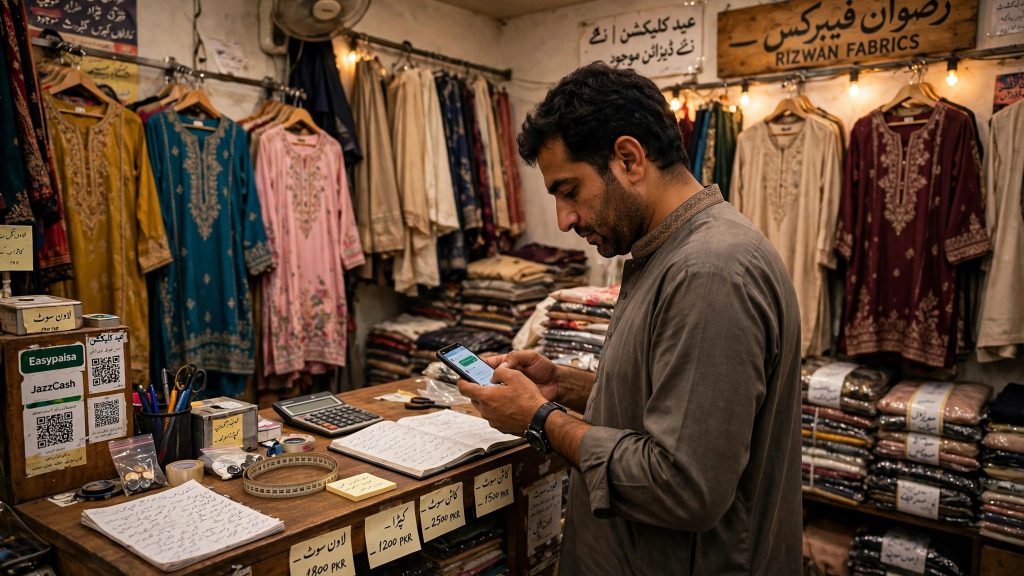
If your online store’s WhatsApp charges suddenly went up in October, nobody made a billing mistake. From 1 October 2026, Meta changed how it charges for messages on the WhatsApp Business Platform (API) — and the change lands directly on the order confirmations and delivery updates that Pakistani online sellers send every day.
This article explains what changed, which businesses actually pay, how the 1,000 free monthly replies work, and — just as important — why the vast majority of small shops using WhatsApp will pay nothing extra at all.
First: Who Is Actually Affected?
This is where most of the confusion starts, so let us clear it up:
- Affected: businesses using the WhatsApp Business Platform (API) — typically online stores, banks, courier and e-commerce brands that send messages through a Business Solution Provider (BSP), a chatbot platform, or similar tools.
- Not affected: normal WhatsApp users, and small businesses using the free WhatsApp Business app on their phone. Chatting with customers from the app remains free, exactly as before.
If you have never heard of the API or a BSP, you are almost certainly in the “not affected” group. Keep reading anyway — if your shop grows into automated messaging, this pricing is what you will move onto.
What Changed on 1 October 2026
Every WhatsApp Business conversation has a 24-hour service window, which opens when a customer messages the business. Until now, utility messages sent inside that window — order confirmations, delivery updates, payment receipts — were free.
From 1 October 2026, that is over. Meta now charges for utility messages per delivered message, even inside the 24-hour service window.
Marketing messages (offers and promotions) and authentication messages (OTPs and login codes) were already charged per delivered message before this change, and they still are. The new part is purely that utility messages can no longer hide inside the free window.
The Four Message Categories — and What Each One Costs
| Category | Typical examples | How it is charged |
|---|---|---|
| Marketing | Sale offers, promotions, new-arrival announcements | Charged per delivered message (already the case before October) |
| Authentication | OTPs, login and verification codes | Charged per delivered message (already the case before October) |
| Utility | Order confirmations, delivery updates, payment receipts | Charged per delivered message — new: now charged even inside the 24-hour service window |
| Service | Your replies in a conversation the customer started | First 1,000 per month, per business phone number, are free; after that, charged at the market’s utility rate |
The pattern is simple: messages your business starts cost money, messages your customers start are the cheapest route — and the first chunk of those is free.
The 1,000 Free Replies: How the Maths Works
Each business phone number on the Platform gets its first 1,000 service messages free every month. Service messages are the replies you send when a customer has messaged you first. Only after you cross 1,000 in a month are the extra service messages charged — and they are charged at the market’s utility rate.
A quick example. If your store chats with about 40 customers a day, that is roughly 1,200 service messages a month. The first 1,000 are free; only about 200 are charged. But note what is not inside this free allowance: your automated order confirmations and delivery updates are utility messages, and those are charged from the very first one.
The Pakistan Problem: No PKR Rate Card Yet
Here we have to be completely honest with you: Meta has not published a Pakistan-specific per-message rate card yet in the pricing information available so far. So anyone quoting you exact “official” PKR prices per message today is guessing.
The closest published regional example is India. Meta’s India rate card lists utility and authentication at ₹0.115 per delivered message (before tax) and marketing at ₹0.8631. We are showing these figures for one reason only: to give you a sense of scale. They are India’s rates, not Pakistan’s — do not use them to calculate your own bill. Your actual rate is the one on your BSP’s rate card and invoice, so ask your provider directly what the Pakistan rate is.
How to Keep Your WhatsApp Bill Under Control
If you are an API user, these habits now directly save money:
- Consolidate your updates. Combine the order confirmation and delivery detail into one clear message instead of sending two or three separate notifications.
- Let customers start the conversation. Replies in customer-started chats use your free service allowance first. Good product pages and clear “chat with us” buttons genuinely lower your bill.
- Use the free window from Click-to-WhatsApp ads. Conversations started through Click-to-WhatsApp ads come with a 72-hour free window, so plan support and follow-ups around campaigns that use them.
- Audit your automated templates. Every automated utility notification now costs money per delivery. If you are sending the same confirmation on WhatsApp, SMS and email at once, you are probably paying three times for one piece of information.
You Are NOT Affected If…
- You only use the free WhatsApp Business app on your phone.
- You reply to customers manually and use no API, BSP, chatbot or bulk-messaging platform.
- You are a normal WhatsApp user — nothing about personal chats has changed.
For the thousands of Pakistani shops that run entirely from the Business app, the 1 October 2026 change is a non-event. It only matters when a business plugs WhatsApp into software — and those are exactly the businesses now seeing the new line on their October bill.
FAQs
Q: I use the free WhatsApp Business app for my shop. Will I be charged now?
No. The 1 October 2026 pricing change applies only to the WhatsApp Business Platform (API), which businesses use through BSPs and chatbot tools. If you chat with customers from the free WhatsApp Business app on your phone, nothing has changed and there is no per-message charge.
Q: What exactly became chargeable on 1 October 2026?
Utility messages — things like order confirmations, delivery updates and payment receipts — sent inside the 24-hour service window. These used to be free within that window; now they are charged per delivered message, the same way marketing and authentication messages already were.
Q: How many free messages does an API business get?
The first 1,000 service messages per month, per business phone number, are free. Service messages are your replies in conversations the customer started. Beyond 1,000, additional service messages are charged at the market’s utility rate. Utility, marketing and authentication messages do not come out of this free allowance.
Q: What is the per-message price in Pakistan?
Meta has not published a Pakistan-specific PKR rate card in the pricing information available so far, so there is no verified official figure to quote. For scale only, India’s published rate card lists utility and authentication at ₹0.115 per delivered message (before tax) and marketing at ₹0.8631 — but those are Indian rates, not Pakistani ones. Check your BSP’s rate card and invoice for the rate you are actually being charged.
Sources
- https://newsable.asianetnews.com/amp/technology/whatsapp-business-new-rules-from-october-1-2026-pricing-free-messages-and-charges-explained-articleshow-12xq5ku
- https://www.businesstoday.in/amp/latest/photo/whatsapp-changes-from-october-1-businesses-will-pay-but-will-you-559031-2026-10-01