
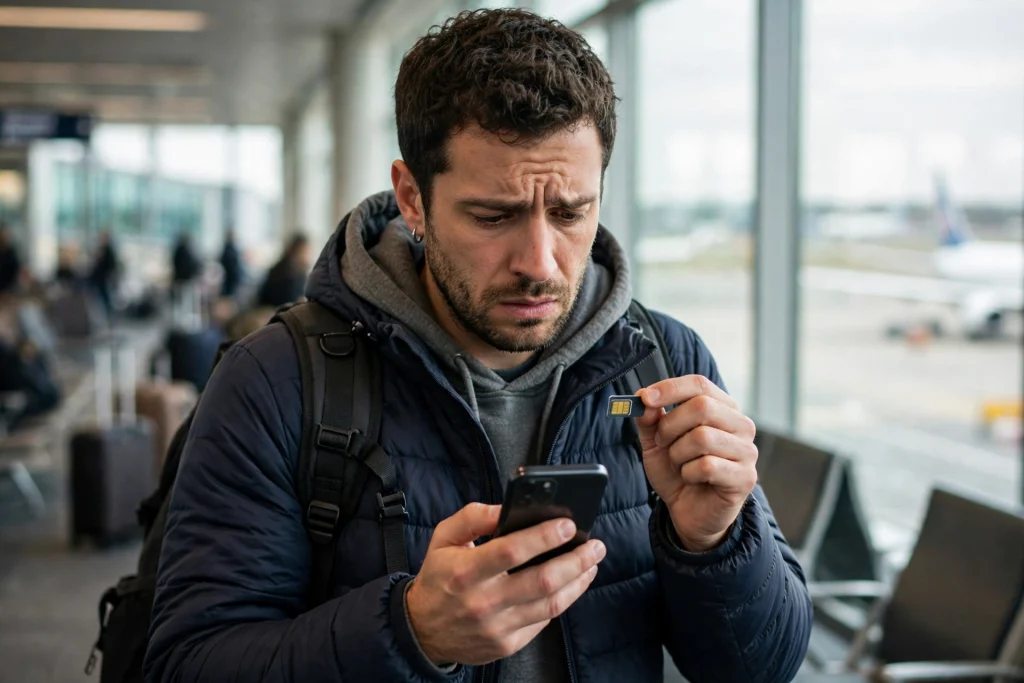
If you are a Pakistani living abroad, your Jazz number is probably much more than just a phone number. It is the number linked to your bank account back home, your NADRA records, your WhatsApp account, and the one-time passwords for apps you still use in Pakistan. That is why a complaint shared online on 24 October 2026 has worried so many overseas Pakistanis: a user said both of her Jazz numbers were blocked after six months of SIM inactivity, even though she said all bills had been paid on time.
Before you panic, read this guide carefully. This is not a confirmed new Jazz policy that blocks every paid number after six months. It is one complaint, plus the inactivity clocks reported alongside it, plus the practical steps you can take to protect your own number. Keeping those three things separate matters, because mixing them up leads to the wrong action. This guide explains what was reported, why paying a bill and using a SIM are two different things, and what overseas Pakistanis can do to keep a Jazz number alive from abroad.
What happened on 24 October 2026
On 24 October 2026, X user Sabeen M. Sultan posted that both her Jazz numbers had been blocked after six months of SIM inactivity. She said all bills had been paid on time, and she urged the Pakistan Telecommunication Authority, known as PTA, to review the policy. The post was reported on 25 October 2026, and it quickly caught attention because it touched a fear many overseas Pakistanis already have: you leave Pakistan, you keep paying, you assume your number is safe, and then one day it stops working.
It is important to be honest about what this story is and what it is not. It is one user’s complaint. The report quotes that one user and a summary of Jazz-side time periods attributed to a Jazz official. It does not quote a Jazz or PTA response to this specific complaint. That does not mean the complaint is untrue, and it does not mean it is settled policy either. Treat it as a warning sign worth acting on, not as proof that every Jazz number abroad will be blocked in the same way. If your number matters to you, check your own SIM’s activity and put a simple keep-alive routine in place.
One detail needs careful handling. The user said bills were paid on time, which suggests a postpaid account, where you receive a monthly bill. But the report does not confirm whether the accounts were prepaid or postpaid. That matters, because the inactivity rule as usually described is about usage — calls, texts, and internet use — not about billing. What keeps a SIM active, according to the reported rule, is activity on the network itself, not payment alone.
Why paying the bill may not be enough
Many overseas Pakistanis make the same reasonable mistake. They set up automatic payment, or a family member in Pakistan pays the bill every month, and they think the job is done. A SIM, however, works differently. A mobile operator does not only check whether money arrived. It also checks whether the SIM itself has been used on the network: a call, a text message, or a mobile internet session.
Your bill payment tells Jazz that the account is in good standing. Your SIM activity tells Jazz that the number is still in use by a real person. If the SIM sits in a drawer for months, or stays in a switched-off phone, the network may see no activity at all — even if every bill was paid. That gap between “paid” and “used” is exactly where the reported problem sits.
This is why the complaint feels unfair to many readers. From the user’s point of view, she did her part: she paid. From the operator’s point of view, as described in the reported rules, the SIM showed no network use for six months. Both things can be true at the same time. That is why this guide tells you to create real, regular network activity — and to keep a record of it — instead of relying on payment alone.
The same lesson applies to families. Often, one person goes abroad and leaves the Pakistani SIM with a parent, spouse, or sibling, with instructions to “keep it charged and paid.” But if nobody actually uses that SIM to make a call, send a text, or use mobile data, the payment alone may not protect it. Someone needs to be responsible not just for the bill, but for the activity.
The three clocks, kept separate
This is the most confusing part of the story, so let us slow down. The reporting mentions three different time periods. They are not three steps of one single rule, and they should not be added together or merged into one timeline. The table below keeps them side by side, exactly as reported.
| Reported figure | What it refers to | What it does NOT mean |
|---|---|---|
| 180 consecutive days of inactivity | The regulatory frame as reported: operators may deactivate SIMs after 180 consecutive days without calls, texts, or internet usage | It does not mean every SIM is automatically blocked on day 181, and it does not mean billing alone resets this clock |
| 90-day active period followed by a 180-day quarantine period | The Jazz-side clocks as reported, attributed to a Jazz official: an active period, then a quarantine period for the number | It does not mean the two periods are the same as the 180-day inactivity figure above; they are a separate reported summary |
| Up to 720 days of dormancy | A broader number-recycling policy as reported, which could extend to 720 days of dormancy | It does not mean you have 720 safe days to do nothing; it describes a longer recycling horizon, not a guarantee of recovery |
Read that table again, because it protects you from two opposite mistakes. The first is thinking you have almost two years because you saw the number 720. You do not have a safe two years of doing nothing. The 180-day inactivity figure should drive your routine: use the SIM well before six months of silence pass. The second is thinking that once a number enters a quarantine period, it is gone on the spot. The reported quarantine idea suggests a window in which the number is held back from being given to someone else — but that window is not a promise, and its exact start, length, and conditions for your account are things only Jazz can confirm. Act early, act inside any window you are told about, and check directly with the operator instead of assuming.
According to the reporting, PTA issued a public warning about the inactivity rule in January 2026. That is a reminder that this is not a secret rule invented last week: regulators have already told users, in public, that long inactivity can lead to deactivation.
What “blocked” can actually mean
When people say a SIM is “blocked,” they can mean several different things, and the right fix depends on which one applies to you. A SIM can be temporarily suspended, deactivated after long inactivity, or recycled, which means it is issued to a new customer. Those are very different situations.
If your SIM has simply stopped working and you are not sure why, do not guess. Contact Jazz through its official helplines and ask for the exact status of your number: is it active, suspended, in a quarantine or holding period, or already reissued? Write down the date and any reference number. That record matters if you need to follow up from abroad.
The hardest truth in this guide is about recycling. Once a number has been recycled to a new customer, it is gone. You cannot get it back by explaining that you paid your bills, or that the number is linked to your bank account, or that you have used it for years. That is why every step here pushes you to act early: act inside the quarantine window, then check with the operator. Never assume recovery is guaranteed, and never pay anyone who promises to “recover” a recycled number for you. Treat such offers as a scam risk, and never share your CNIC details, fingerprints, or one-time passwords with them.
How to keep your Jazz number alive from abroad
Here is a practical routine that any overseas Pakistani can follow. It requires regularity, and one person taking responsibility.
First, decide where the SIM physically lives. If you took it abroad, keep it in a phone — even a second, older phone — switched on and able to connect through roaming, if roaming is active on your account. If you left it in Pakistan with family, agree clearly that they will use it regularly. “Keep it safe in a drawer” is not a plan. “Make a short call from it every two to three weeks” is a plan.
Second, create real network activity every few weeks, not every five months. A short call from the Jazz SIM itself, a text message, or a brief mobile internet session all count as the kind of usage described in the reported rule. Waiting until month five is risky, because travel, illness, or a lost phone can easily push you past the limit.
Third, keep the account in good standing as well as active. For postpaid, keep bills paid on time. For prepaid, keep a valid balance and recharge before expiry where required. You need both: paid up and used.
Fourth, keep a simple log: the date, the kind of activity — call, text, or data — and who made it. If a family member in Pakistan is doing it for you, ask them to confirm it with a short dated message.
Fifth, check that roaming, if you need it, is actually working before you rely on it. Test it soon after you arrive abroad, not six months later. If roaming is not working or is too expensive, the family-in-Pakistan option may be safer.
Sixth, keep your contact details with Jazz up to date, and keep your CNIC valid. An expired CNIC can slow down a replacement SIM later. Also tell one trusted family member where the SIM is and what to do if it stops working.
The voluntary block option: useful, but not the same as inactivity
Jazz also offers a voluntary block, and it is important not to confuse this with an involuntary block after inactivity. A voluntary block is something you choose. According to Jazz SIM guides checked in October 2026, Jazz offers a voluntary block for up to 90 days through 111 for prepaid customers or 777 for postpaid customers — useful, for example, if you lose your phone.
But a voluntary block is not a way to “pause” the inactivity clock for a year while you are abroad. It lasts up to 90 days, and it is a block you request — not a protection scheme that keeps an unused number safe indefinitely. If you are going abroad for a long period, do not assume that requesting a block solves the keep-alive problem. Ask Jazz directly, before you travel or before the block period ends, what happens when it expires, what you need to do to reactivate, and whether any overseas protection option is currently offered. An older article mentions a PTA programme for overseas Pakistanis, but it was not re-verified for October 2026, so this guide does not present it as a live scheme — simply check whether any overseas protection option is currently offered, and get the answer as a reference from the operator.
In short, use the voluntary block for what it is — a short, requested pause of up to 90 days — and keep your regular usage routine for everything else. Set a reminder before the 90 days end so the SIM does not drift into a longer inactive period unnoticed.
If your SIM is already blocked: what to try, step by step
If your Jazz SIM has already stopped working, do not panic, but act quickly. Time matters here, because of the quarantine and recycling windows described above.
Step one: confirm the status. Call Jazz on 111 from a Jazz number if you can, or 777 if you are a postpaid customer, and explain that you are abroad and your number has stopped working. If you cannot call from the affected number, use another phone and give Jazz your number and the approximate date the SIM last worked, through official channels only. Ask plainly: is the number suspended, deactivated, in quarantine, or reissued?
Step two: if the number is in a holding or quarantine stage, ask what the next step is to restore it, what documents are needed, and what the deadline is. Ask for that deadline as a specific date, not just “soon.” If you are abroad and cannot visit a Jazz service centre in person, ask what options exist for overseas customers, including whether a family member with proper authorisation can act on your behalf. Do not send your CNIC copy or fingerprints to an unofficial WhatsApp number or a stranger who claims to work for Jazz. Use official helplines, service centres, and stores only.
Step three: if a replacement SIM is the answer, be ready for the practical requirements. According to guides checked in October 2026, a replacement SIM on the same number costs Rs 550 for Jazz prepaid or postpaid, issued after CNIC and fingerprint verification. That is why many overseas users need a trusted person in Pakistan to help, or need to plan a visit. Go through the official process, even if it is slower.
Step four: if Jazz tells you the number has already been recycled to a new customer, move quickly to protect your accounts. Change the number linked to your bank accounts, your email recovery options, your WhatsApp account, and any app that sends one-time passwords to the old number. This is urgent, because the new holder could receive codes meant for you.
Step five: if you believe you have been treated unfairly, or you cannot get a clear answer, contact PTA on 0800-55055. Have your number, the dates of last use, and any Jazz reference numbers ready, and keep a note of your complaint reference. A complaint does not guarantee recovery — especially if the number is already recycled — but it creates an official record.
For comparison only, Zong’s terms as noted in the same guides set 180 days of inactivity before a number can be reissued. That is Zong’s figure, not Jazz’s. It is mentioned only to show the wider pattern: operators in Pakistan treat six months of silence as a serious threshold. Do not use another operator’s rule to argue your Jazz case. Use Jazz’s own answer for your own number.
Mistakes overseas Pakistanis should avoid
The first mistake is relying on bill payment alone. The second is leaving the SIM in a drawer in Pakistan and assuming a family member is using it, without ever checking. The third is waiting until the number stops working before asking what the rules are. By then, you may already be inside a quarantine window with a deadline, or past it.
The fourth mistake is trusting unofficial “SIM recovery” services online. Anyone who asks for your CNIC, your fingerprints, your Jazz account password, or a one-time password in exchange for restoring a number is a risk, not a helper. Use official Jazz and PTA channels, even from abroad, even if it takes longer.
The fifth mistake is forgetting what the number is linked to. Before you travel, make a list — on paper, kept safely, not shared online — of every important service linked to your Jazz number: your bank account, NADRA-related logins, WhatsApp, email recovery, and any government or utility app. If the number is ever lost, that list tells you what to update, starting with your bank.
The sixth mistake is assuming that because nothing happened during your last trip abroad, nothing will happen this time. A number that survived one long absence by luck may not survive the next. A routine you follow every few weeks, with a log, is a plan; luck is not.
A simple keep-alive routine you can start today
Here is the whole guide in one routine for your phone’s reminders. Every two to four weeks, use the Jazz SIM itself: make a short call, send a text, or use mobile data on it. Keep the bill paid and, for prepaid, the balance valid. Keep a dated log of each use. Set a reminder before any voluntary block period ends, and before six months of silence ever approaches. Keep your CNIC valid, and tell one trusted family member where the SIM is and what to do if it stops working. If it does stop working, contact Jazz quickly, ask for the exact status, and act inside any quarantine window rather than assuming the number can be recovered. If it is already recycled, update your bank and other linked services immediately.
That routine is the difference between a number that quietly survives years abroad and one that disappears after six silent months. The complaint from 24 October 2026 is a reminder, not a verdict on every Jazz customer. Check your own SIM today: when was it last used, by whom, and from which phone? If you cannot answer confidently, fix it today — with a short call from the SIM itself, not just another bill payment.
The fresh complaint and the clocks described in this guide were reported by Bloom Pakistan in its 25 October 2026 report on the 24 October 2026 post, and readers who want the original account of the complaint should read that report alongside this guide.
FAQs
Can Jazz block my number even if I pay all my bills on time?
Paying bills on time keeps your account in good standing, but the inactivity rule as reported is about usage, not billing. If the SIM shows no calls, texts, or internet use for 180 consecutive days, the operator may deactivate it under the reported frame. To protect your number, keep it both paid up and regularly used.
How often should I use my Jazz SIM while I am abroad?
Use it every two to four weeks, well before six months of silence pass. A short call from the SIM itself, a text message, or a brief mobile internet session all count as the kind of activity described in the reported rule. Keep a dated log of each use. Waiting until month five is risky, because travel problems or a lost phone can easily push you past the limit.
What should I do if my Jazz SIM is already blocked?
Contact Jazz quickly on 111 for prepaid or 777 for postpaid, ask for the exact status of your number, and ask for any deadline as a specific date. If a replacement SIM is offered, it costs Rs 550 for Jazz prepaid or postpaid according to guides checked in October 2026, and it is issued after CNIC and fingerprint verification through official channels. Act inside the quarantine window, then check with the operator. If the number has already been recycled, it is gone, so update your bank and other linked services immediately.
Can I get my number back after it has been given to someone else?
No. Once a number is recycled to a new customer, it cannot be recovered, no matter how long you used it before or how many bills you paid. If recycling has already happened, focus on protecting your accounts: change the number linked to your bank, your WhatsApp, your email recovery, and any app that sends you one-time passwords, and contact PTA on 0800-55055 if you need to raise the matter officially.
Also read
PTA’s New SIM Rules: A Dead Relative’s SIM in 60 Days, a Cancelled CNIC’s SIM in 5 Days
PTA 180-Day Prepaid Balance Rule: Recharge and Get Your Expired Balance Back