
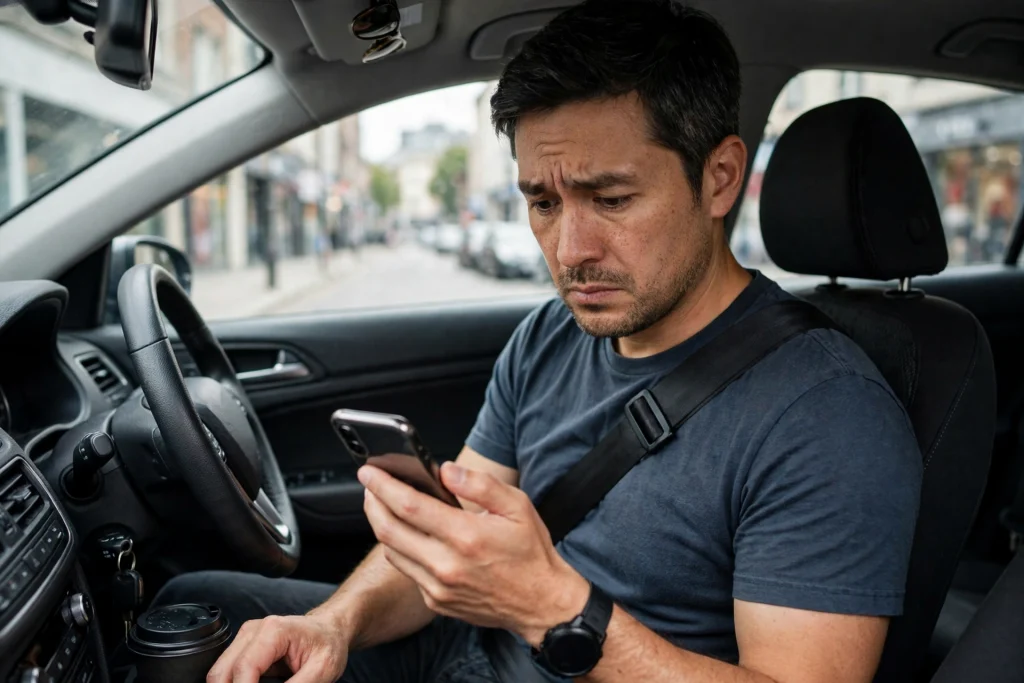
A ride-hailing driver in Rawalpindi gets a booking that looks perfectly normal. The passenger says he is a senior officer, sends a photo of an identity card on WhatsApp to prove it, and asks the driver to come to a spot near a sensitive location. Once the driver arrives, the story changes. There is a sudden medical emergency, a hospital bill that must be paid right now, and an urgent request: please send the money through mobile banking, and it will be returned immediately. The driver sends the money. The booking is cancelled. The passenger disappears.
This is not a made-up warning. On 30 October 2026, Pakistan’s National Cyber Crime Investigation Agency, the NCCIA, registered a case in Islamabad against suspects accused of running exactly this kind of fraud against InDrive drivers and delivery riders. The case is a reminder that online fraud in Pakistan is no longer limited to fake prize messages and phishing links sent to ordinary users. Criminals are now targeting the drivers themselves, using fake authority, fake identities and real pressure to steal money from people who earn their living on the road.
This article explains how the scam is reported to work, the red flags that should make any driver stop and think, the steps drivers can take to protect themselves, and what to do if money has already been sent. It also explains what this case is not: the suspects are accused, not convicted, and this case is separate from other fraud stories reported in the same week.
How the scam is reported to work
According to the reports of the case, the suspects posed as senior government or army officers. That impersonation is the heart of the scam, because in Pakistan, a call or message from someone claiming to be an officer carries automatic authority. Many people, including experienced drivers, are less likely to question a request when it appears to come from someone powerful.
To make the impersonation believable, the suspects allegedly used fake identity cards, fake SIM cards, WhatsApp accounts and JazzCash accounts. A photo of an ID card sent on WhatsApp looks convincing on a small phone screen, especially when the driver is in a hurry to start a trip. A WhatsApp profile with an official-sounding name and a uniformed display picture adds to the effect. None of this proves that the person is who they claim to be, but in the moment, it is often enough.
The next step was the booking itself. The suspects allegedly booked InDrive rides or deliveries near sensitive locations in the Rawalpindi and Islamabad area, including places near the Combined Military Hospital (CMH), the General Headquarters (GHQ), Nur Khan Airbase and the Red Zone in Rawalpindi. These locations were not chosen by accident. A booking near a military hospital or a headquarters building makes the officer story feel real. A driver who sees a pickup point near such a place is more likely to believe that the passenger is genuinely connected to it.
Once contact was made, the trap closed. The suspects allegedly invented an urgent situation, usually a medical emergency or a hospital bill that needed paying at once, and asked the driver to send money through mobile banking. The request always came with urgency and secrecy: pay now, do not tell anyone, the money will be returned right away. After the driver transferred the money, the booking was cancelled and all contact was cut off. The driver was left with no passenger, no trip payment, and no way to recover the transferred amount through the ride-hailing app, because the money had been sent privately, outside the app.
It is important to be precise about the status of these claims. The NCCIA has registered a case and an investigation is under way. The details above are allegations reported by the agency and the press. The suspects have not been convicted, and no suspect names have been published in the reports used for this article, so none are printed here. Readers should treat the method as a warning about a real pattern, not as a proven verdict against any named person.
Why drivers are an easy target
Drivers and delivery riders are attractive targets for this kind of fraud for several reasons, and understanding those reasons is the first step to defending against it.
First, drivers work alone and make fast decisions. A driver who is already on the road, managing traffic, navigation and the next booking, does not have time to sit down and verify a passenger’s identity. A scammer who creates urgency knows this. The emergency story is designed to fill the few seconds in which a driver might otherwise stop and think.
Second, drivers handle money all day. Sending and receiving mobile payments is a normal part of their work, so a request to transfer money does not feel as unusual to a driver as it might to someone who rarely uses mobile banking. The scammer hides a theft inside an action the driver performs dozens of times a week.
Third, drivers are used to helping passengers. A driver who has spent years taking people to hospitals, helping with luggage and dealing with emergencies is naturally inclined to help when someone says a family member is in hospital. The scam exploits that kindness directly. The emergency is fake, but the driver’s instinct to help is real, and the scammer counts on it.
Fourth, many drivers earn modest daily incomes, and the sums involved in these frauds can represent a full day’s earnings or more. Losing that money hurts far more than a minor inconvenience. It can mean a missed rent payment, an unpaid instalment on the vehicle, or a week of tight budgeting for the family. That is why this is not a small story: for the victims, it is a serious financial blow.
The red flags: when to stop and refuse
Every version of this scam follows a similar pattern, and learning the pattern is the best protection. If you are a driver or a rider, treat any booking that shows several of these signs as a warning to stop.
The first and biggest red flag is a passenger asking you for money. In a normal ride or delivery, money flows from the passenger to the driver, never the other way round. If a passenger asks you to send money, pay a bill, buy something on their behalf, or transfer funds to a third person, that is not normal. It does not matter how senior they claim to be, how urgent the story sounds, or how convincing the ID photo looks. A genuine passenger does not need their driver to pay their hospital bill.
The second red flag is the combination of emergency plus secrecy. Real emergencies are handled by calling an ambulance, a hospital or the family, not by asking a stranger driver to quietly transfer money and keep it secret. If someone tells you not to tell anyone, not to call anyone, and to act immediately, that secrecy is itself the warning. Scammers need secrecy because a single phone call to a relative, a colleague or the police would expose the story.
The third red flag is the identity proof that arrives outside the app. A photo of an ID card on WhatsApp proves nothing. ID photos can be copied, edited and faked easily, and a WhatsApp account can be created with any name and any display picture. The only identity information you should trust is what the ride-hailing app itself shows you: the passenger’s in-app name, rating, trip history and verified phone number. If the story depends on documents sent privately on WhatsApp, treat it as unverified.
The fourth red flag is the location trick. A pickup point near a sensitive or impressive location does not prove anything about the passenger. Anyone can drop a pin near a hospital, a headquarters or a government building. The location is chosen to make you believe the story, not because the passenger actually works there.
The fifth red flag is the sudden change of plan. A normal booking has a clear pickup, a clear drop-off and a clear payment method. If the booking suddenly turns into a request to go somewhere else, pay someone else, or handle a delivery that was never mentioned, step back. Scammers change the plan mid-conversation because the original booking was only ever bait.
If you spot these signs, the safest response is simple: politely decline, cancel the booking through the app if needed, and move on. You do not owe a stranger an explanation for refusing to send them money. A genuine passenger will understand. A scammer will pressure you harder, and that pressure is itself confirmation that you made the right choice.
How to protect yourself on every trip
Beyond recognising red flags, there are practical habits that make drivers much harder to scam.
Keep every booking inside the app. Do not accept side deals arranged purely on WhatsApp, do not agree to trips that are cancelled in the app but continued privately, and do not transfer money to a passenger or to a number they give you. The app is your record: it shows who booked, where the trip was, and what was paid. Once you step outside the app, you lose that record and the platform’s ability to help you.
Verify identity through the app, not through WhatsApp photos. If a passenger claims to be an officer or an official, remember that real officers do not need to prove themselves to a driver with a WhatsApp photo, and they certainly do not ask drivers for emergency money transfers. If you are ever unsure, you can call the passenger through the app’s own calling feature rather than a number they send you separately.
Never transfer money to a passenger, for any reason. This rule should be absolute. There is no version of this request that is safe: not a hospital bill, not a fuel payment, not a parcel charge, not a “send it now and I will pay you double when I see you” promise. If someone is in a genuine medical emergency, the right response is to call emergency services or take them to the nearest hospital, not to send them money through your wallet.
Keep a record of suspicious bookings. Take a screenshot of the booking details, the chat and any numbers involved before you cancel or block, and keep it. Screenshots are useful evidence if you report the incident, and they cost you nothing to keep.
Talk to other drivers. Scams spread through driver communities quickly, and so do warnings. If you receive a suspicious booking, tell fellow drivers in your area, your driver group or your stand. A scammer who has been identified by one driver will find it much harder to fool the next one.
What to do if you have already sent money
If you have already transferred money and now realise it was a scam, act quickly, because speed matters in getting the transaction traced.
First, save everything: screenshots of the booking, the chat, the transfer receipt, the number or account the money went to, and the time of the transfer. Do not delete the chat, even if it feels embarrassing. The evidence is what makes a complaint possible.
Second, report the incident to InDrive support through the app. Report the booking, the passenger account and the details of what happened. Platforms can block fraudulent accounts, and a report from you may be the one that stops the same account from targeting another driver.
Third, report to the NCCIA, which is the agency investigating this case. As established in earlier reporting on this site, the reporting routes are the NCCIA’s online portal and its helpline 1799. Give them the screenshots, the transfer details and the timeline. You should also inform your mobile wallet provider or bank about the fraudulent transfer, because they may be able to flag the receiving account.
Fourth, if the amount is significant, consider reporting to your local police station as well, with the same evidence. A written complaint creates a formal record, and it helps investigators connect your case to others.
It is honest to say that recovering money sent voluntarily through mobile banking is difficult, and no one should promise you a refund. But reporting still matters. Reports are how patterns are identified, accounts are blocked, and cases like the one registered on 30 October 2026 are built. Silence only helps the scammer.
This case in context
This NCCIA case should not be confused with other fraud stories reported around the same time. It is not the same as the separate Rawalpindi call-centre raid in which a large number of foreign nationals were detained, which involved different suspects and different victims. Mixing the two stories up would only confuse readers and unfairly link unrelated people to this case.
It is also worth noting the wider context. Earlier in 2026, InDrive blocked more than 80,000 suspicious or fraudulent accounts in Pakistan after an organised scam targeting delivery riders. That figure, reported separately, shows that platform fraud is a large and ongoing problem, not a single incident. Drivers are being targeted at scale, which is why awareness matters as much as any single investigation.
It is equally important to keep this story separate from the Easypaisa and JazzCash payment delays covered elsewhere on this site. Those delays were about merchant payments slowing down during a crackdown, which is a system problem. This case is about criminals impersonating officers to steal from drivers, which is a deliberate crime. The two stories share the names of the wallets, but they are not the same problem, and the advice for each is different.
The bottom line for drivers
The rule for every driver and rider can be stated in one sentence: your passenger pays you, you never pay your passenger. If a booking asks you to reverse that rule, no matter how convincing the uniform, the ID photo or the emergency story, walk away from it. Cancel through the app, keep your screenshots, and report the account.
Drivers keep Pakistan’s cities moving, and they deserve to do that work without being hunted by fraudsters posing as officers. The NCCIA case registered on 30 October 2026 is a warning, but it is also a sign that the authorities are paying attention. The best way drivers can help is by recognising the pattern early, refusing the transfer, and reporting every attempt, so that the next driver who gets the same booking already knows exactly what it is.
According to ARY News, the NCCIA registered a case in Islamabad on 30 October 2026 against suspects accused of posing as senior government and army officers with fake ID cards, SIMs and accounts to book fake InDrive rides and deliveries near sensitive locations and then trick drivers into sending money for fabricated emergencies.
FAQs
What is the NCCIA InDrive fake-booking scam?
It is a fraud pattern in which suspects allegedly pose as senior government or army officers, book InDrive rides or deliveries near sensitive locations to look credible, and then ask drivers to send money urgently for a fabricated medical emergency or hospital bill. After the payment, the booking is cancelled and contact is cut off. The NCCIA registered a case about this pattern in Islamabad on 30 October 2026.
Are the suspects convicted?
No. A case has been registered and an investigation is under way. The details reported are allegations made by the NCCIA, not a court verdict. No suspect names have been published in the reports used for this article, and none are printed here.
Should a driver ever send money to a passenger?
No. In a normal ride or delivery, money flows from the passenger to the driver, never the other way round. Any request from a passenger for you to transfer money, pay a bill or buy something on their behalf should be refused, no matter how urgent the story sounds or how convincing an ID photo on WhatsApp looks.
How can I verify a passenger’s identity?
Trust only what the ride-hailing app itself shows: the in-app name, rating, trip details and verified contact. A photo of an ID card sent on WhatsApp proves nothing, because ID photos can be copied and faked, and WhatsApp accounts can be created with any name and picture. Keep bookings inside the app.
What should I do if I already sent money to a scammer?
Save screenshots of the booking, chat and transfer receipt, report the passenger account to InDrive support through the app, report to the NCCIA through its portal or helpline 1799, and inform your wallet provider or bank about the fraudulent transfer. Recovery is difficult and cannot be promised, but reporting helps block the account and build the case.
Is this the same as the Easypaisa and JazzCash payment delays?
No. The payment delays were a system issue affecting merchant payments during a crackdown. This case is a deliberate impersonation crime targeting drivers. The two stories share wallet names but are different problems with different advice.