
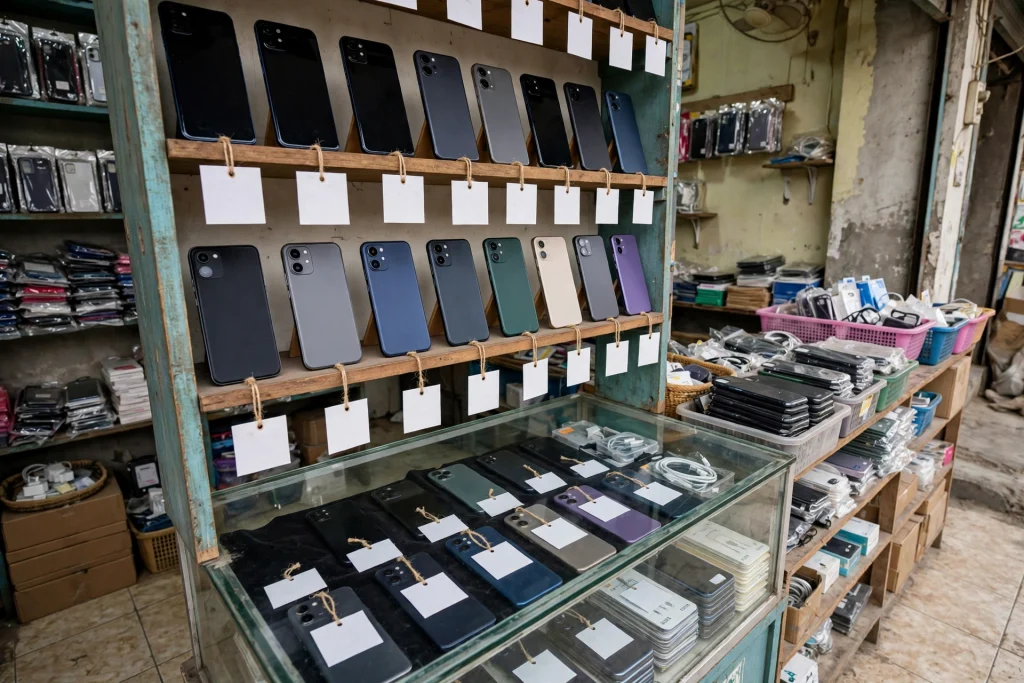
If you walked into a mobile market in Karachi in late October 2026 hoping to buy a new phone, you may have had an unpleasant surprise. The phone you had budgeted for cost thousands of rupees more than it did a few months ago, and the cheapest phones in the shop had jumped the most. According to a report published by Dawn on 26 October 2026, all major brands raised handset prices by Rs 15,000 to Rs 30,000 in Karachi retail markets, and a basic phone with 4GB of RAM and 64GB of storage that cost Rs 20,000 to Rs 22,000 a few months ago was being quoted at Rs 35,000 to Rs 40,000.
That is not a small adjustment. For a family buying a first phone for a student, or a shopkeeper replacing a broken handset, an extra Rs 15,000 or more can be the difference between buying now and waiting months. This article explains what happened, why dealers say it happened, why some consumers blame something else, and, most importantly, what you should check before you pay the new price.
What exactly went up, and by how much
The figures in the Dawn report describe Karachi’s retail markets, and that detail matters. These are shop-quoted prices observed in one city’s markets, not a fixed nationwide price list set by the brands. Prices in Lahore, Islamabad, Rawalpindi or smaller cities may differ, and prices from one shop to another in the same market can differ too. Treat the numbers below as a picture of what buyers were facing in Karachi in late October 2026, not as a rate card that applies everywhere.
The headline figure is the range: increases of Rs 15,000 to Rs 30,000 across major brands. That range covers the market broadly, from mid-range phones to higher models. The sharpest pain, though, was at the bottom of the market. A basic 4GB RAM and 64GB storage phone, the kind of phone bought as a first smartphone or a simple everyday handset, had moved from Rs 20,000–22,000 to Rs 35,000–40,000 in a few months. In percentage terms, that is close to a doubling at the entry level, which is why the story hit ordinary buyers so hard.
It is worth being clear about what the Rs 35,000–40,000 figure is not. It is not the price of every budget phone, and it is not a claim that no cheaper phone exists anywhere. It is the quoted range for that basic 4GB/64GB class in Karachi retail at the time of the report. A phone with different storage, a different brand, or an older model still in stock may be priced differently. The point of the figure is the direction and the size of the jump, not a single exact price for every handset.
The timing also matters. This was not a one-day spike reported by a single shop. The report, picked up the same day by ProPakistani, NetMag, TechJuice and Times of Karachi, described a market-wide movement across brands, which suggests a common cause rather than one company raising its prices alone. When every brand moves in the same direction at the same time, buyers should look for a shared cost pressure, and that is exactly what the dealers pointed to.
Why dealers say prices rose: the memory-chip story
The explanation given by the trade is about something most phone buyers never think about: memory chips. Every smartphone contains RAM, which is the memory it uses while running apps, and ROM or internal storage, which is where photos, videos and apps are kept. Those chips are made by a small number of large manufacturers, and their prices affect the cost of every phone.
According to the Dawn report, Muhammad Rizwan Irfan, president of the Karachi Electronics Dealers Association, and Mian Abdul Rehman of the Pakistan Mobile Phone Manufacturers Association both attributed the rise mainly to rising memory-chip costs. Their argument is straightforward. Artificial intelligence companies, robotics firms and data centre operators are buying enormous quantities of memory at high prices, because AI systems need huge amounts of fast memory to train and run. Chip production has not kept pace with that demand, so the price of memory has gone up, and phone makers are passing that higher cost on to buyers.
This is a global story with a local consequence. Pakistan does not manufacture these memory chips, so when global memory prices rise, Pakistani importers and assemblers pay more, and that cost reaches the shop counter in rupees. A phone that needed the same chips a year ago now costs more to build, even if nothing else about the phone has changed. The dealers’ point is that the phone itself is not better or newer; its ingredients simply cost more.
There is a reason this explanation is plausible. Memory is one of the few components that appears in every phone, from the cheapest to the most expensive, so a memory price shock would be expected to lift prices across all brands, which is what the report describes. It would also be expected to hit entry-level phones hardest in percentage terms, because memory is a larger share of a cheap phone’s total cost than of an expensive phone’s cost. Both patterns match what Karachi buyers were seeing.
Why some consumers blame taxes and the US-Iran war instead
Not everyone accepts the dealers’ explanation. Consumers interviewed for the report blamed taxes and the disruption to trade caused by the US-Iran war. Those are understandable reactions. When prices jump suddenly in Pakistan, taxes are often part of the story, because duties and sales taxes make up a significant share of a phone’s retail price. And when a regional conflict disrupts shipping and trade, people reasonably expect shortages and higher prices.
The dealers, however, pushed back on the tax argument. Their position, as reported, is that taxes did not rise enough to explain a jump of this size. In other words, even if taxes are high, they were already high a few months ago, and a tax structure that has not changed much cannot by itself explain why the same phone costs Rs 15,000 more than it did recently. Something else must have moved, and in their view that something is the cost of memory chips.
This is a genuine disagreement, and this article does not settle it by picking a winner. Both sides may be partly right. Taxes may make phones expensive in Pakistan in general, while the memory-chip shock explains the sudden additional increase in October. Trade disruption may add to costs in some channels, while memory prices drive the broad, across-the-board movement. What matters for a buyer is not winning the argument, but understanding that the price you see in the shop is the result of several pressures at once, and that no single villain explains the whole jump.
One practical consequence of this disagreement is that buyers should be sceptical of any shopkeeper who blames the entire increase on one cause, whether taxes, war or chips. A seller who gives you only one reason may be simplifying the story, or may be using a popular explanation to justify a markup that is higher than the market rate. Compare prices across shops before you believe any single explanation.
What this means for you as a buyer
The most important question for a buyer is not why prices rose, but what to do about it. There is no source that gives a date for prices falling again, and this article will not promise one. Memory costs are the driver identified by the trade, and no one in the reporting has said when, or whether, those costs will reverse. Anyone who tells you prices will definitely drop next month is guessing, and you should not delay a phone you urgently need on the basis of a guess.
That said, there are smart steps you can take before paying the new price.
First, check the PTA-approved status of the phone before you buy. In Pakistan, a non-approved phone can be blocked from local networks, which turns a bargain into a useless device. You can verify a phone’s IMEI status through the PTA’s own system before handing over money. Do not accept a seller’s word alone on this, and be especially careful with phones offered well below the market price, because that discount may be hiding a non-approved or grey-import device.
Second, understand the difference between an official phone and a grey import. An official phone comes through authorised channels, with a warranty you can actually claim in Pakistan. A grey import may be cheaper on the day, but warranty support, spare parts and after-sales service can be difficult or non-existent. When prices are rising, the temptation to save money with a grey import is strong, but weigh that saving against the risk of being left with no support if the phone develops a fault.
Third, compare the shop-quoted price with the brand’s list price. Brands and their official dealers publish prices for current models, and that list price is your anchor. If a shop is quoting far above the list price, ask why, and check another shop. In a rising market, some sellers add their own margin on top of the genuine increase, and the only defence against that is comparison. Visit two or three shops, check online listings from reputable sellers, and do not buy from the first shop you enter if the price feels wrong.
Fourth, consider whether you actually need the phone you are looking at, or whether a slightly older model does the same job. When a whole market rises, last year’s model, still in stock, may offer much better value than this year’s model at its new price. The differences between generations are often small for everyday use: messaging, video, browsing and calls. A phone with 6GB of RAM from last year may serve you better than a 4GB phone from this year at a similar price.
Fifth, if your current phone still works, ask yourself whether the purchase can wait. This is not a prediction that prices will fall, and you should not wait on that hope alone. But if your need is not urgent, waiting costs you nothing, and it gives you time to save, to compare, and to see whether the market stabilises. If your phone is broken or unsafe to use, buy the best phone you can afford now, and do not let a hope of lower prices leave you without a working phone.
Finally, keep your receipt and your box. In a market where prices are moving fast, proof of purchase, the IMEI number and warranty documents matter more than ever, especially if you need to claim a warranty or prove that your phone is PTA-approved later. Photograph the receipt and keep it somewhere safe.
How this fits with the phones covered on this site
This market-wide story is different from the individual phone launches covered elsewhere on this site, and it helps to keep them separate. A launch article about the Vivo Y32 or the Realme 15 Pro tells you the price of one specific phone at one point in time. This article tells you about the whole market moving underneath those individual prices. Both kinds of information are useful, but they answer different questions. If you want to know what one phone costs, read its launch article. If you want to know why every phone in the shop seems more expensive than you expected, this is the story.
It is also worth remembering that individual launch prices are set by brands, while shop prices are set by the market. A brand may announce a phone at one price, and a shop may quote a different price on the day you visit, because of stock levels, demand, currency movement and the memory costs described above. That gap between announcement price and shop price is normal in a rising market, and it is another reason to compare shops rather than trusting a single quote.
The bottom line
Smartphone prices in Pakistan jumped sharply in October 2026, with Karachi retail reporting increases of Rs 15,000 to Rs 30,000 across major brands, and basic 4GB/64GB phones moving from around Rs 20,000–22,000 to Rs 35,000–40,000. Dealers blame rising memory-chip costs driven by AI, robotics and data centre demand, while many consumers blame taxes and trade disruption from the US-Iran war. The dealers say taxes did not rise enough to explain the jump, but both sides agree on the fact that buyers are paying more.
No source gives a date for prices falling again, so do not plan your purchase around a promised drop. Instead, verify PTA approval, prefer official channels with real warranty support, compare shop prices against brand list prices, consider last year’s model for better value, and keep your receipt and box. In a market where every rupee counts, those five checks are worth more than any rumour about what prices will do next month.
According to Dawn, all major brands raised handset prices by Rs 15,000 to Rs 30,000 in Karachi retail markets, with a basic 4GB RAM and 64GB storage phone that cost Rs 20,000 to Rs 22,000 a few months ago now quoted at Rs 35,000 to Rs 40,000, and with trade representatives attributing the rise mainly to rising memory-chip costs driven by AI, robotics and data centre demand.
FAQs
How much did smartphone prices rise in Pakistan in October 2026?
According to Dawn’s 26 October 2026 report, all major brands raised handset prices by Rs 15,000 to Rs 30,000 in Karachi retail markets. A basic 4GB RAM and 64GB storage phone that cost Rs 20,000 to Rs 22,000 a few months earlier was being quoted at Rs 35,000 to Rs 40,000. These are Karachi retail observations, not fixed nationwide prices.
Why did smartphone prices go up?
Trade representatives quoted in the report blame rising memory-chip (RAM and ROM) costs, driven by AI companies, robotics firms and data centres buying memory at high prices while production has not kept pace. Consumers interviewed blamed taxes and trade disruption from the US-Iran war, while dealers said taxes did not rise enough to explain the jump. Both sides are reported here; the article does not pick a single cause.
Will smartphone prices come down soon?
No source in the reporting gives a reversal date, and this article does not promise a drop. Memory costs are identified as the main driver, and there is no published timeline for those costs falling. Do not delay an urgently needed purchase on the hope of a price drop, and do not trust anyone who guarantees one.
Should I buy a phone now or wait?
If your current phone is broken or unusable, buy the best PTA-approved phone you can afford now, after comparing shop prices against the brand’s list price. If your phone still works and the purchase is not urgent, waiting costs nothing and gives you time to save and compare, but wait as a budgeting choice, not because a price fall is promised.
How do I avoid overpaying in a rising market?
Verify the phone’s PTA approval status before paying, prefer official channels with a real Pakistani warranty over grey imports, compare the shop quote with the brand’s list price, visit more than one shop, and consider last year’s model, which may offer better value than this year’s model at its new price. Keep your receipt, box and IMEI record.
Is the Rs 35,000 to Rs 40,000 figure the price of every budget phone?
No. It is the quoted range for the basic 4GB RAM and 64GB storage class in Karachi retail at the time of the report. Prices vary by brand, model, storage, city and shop, so use it as a picture of the market’s direction, not as a fixed price for every handset.