
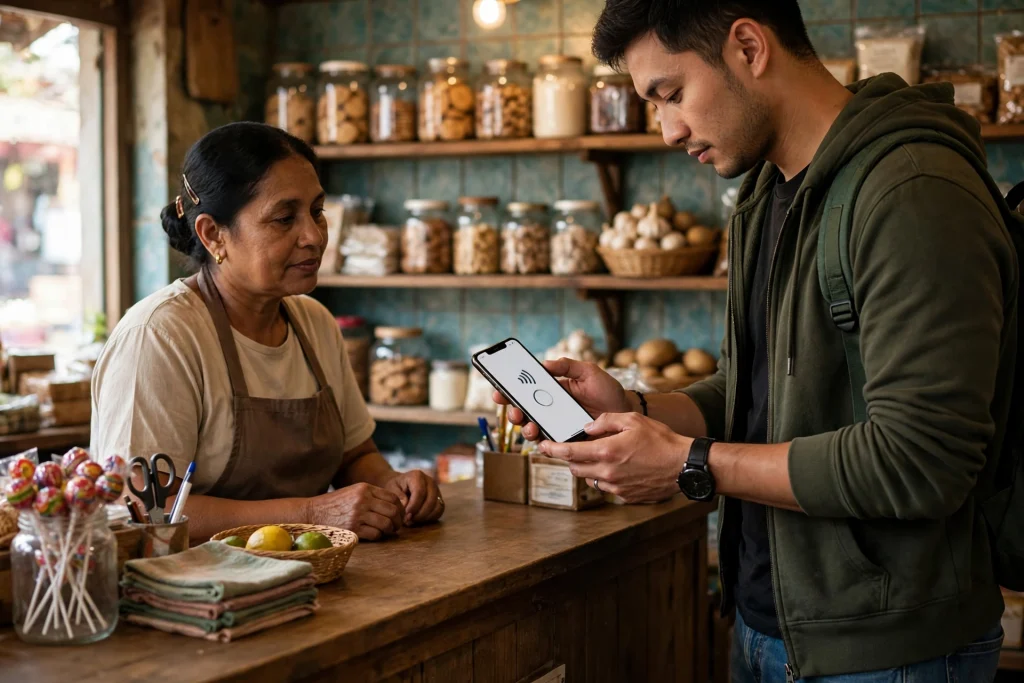
If you tried to pay an online shop, a bill, or a service with Easypaisa or JazzCash in recent weeks and the payment got stuck, delayed, or never reached the seller, you are not alone — and you are probably asking the same question thousands of other Pakistanis are asking right now: is Easypaisa down? Is JazzCash down?
Here is the short answer, and it matters a lot: no nationwide wallet outage is evidenced. Reports consistently say that routine wallet services and person-to-person transfers — sending money from one wallet to another — have continued to work. The disruption is concentrated in a different place: merchant and aggregator payment channels, the behind-the-scenes routes that carry payments from customers to businesses through intermediary firms. That difference decides whether your payment is likely to be affected, what you should do next, and what you should not do.
This article explains what is happening in simple terms, who is affected, what is behind the delays according to reports, and the exact steps to take if your own payment is stuck. It also states clearly what is still unknown, because no restoration timeline had been published as of the latest monitor update on 25 October 2026 — and guessing a fix date would only mislead you.
What Is Actually Happening?
From 5 October 2026, merchant transactions processed through six payment intermediary firms ran into processing delays and settlement problems. Settlement is the step where money actually moves from the payment channel to the merchant’s account. When settlement is delayed, you may have paid, but the seller does not see the money yet — or the payment sits in an unclear state for longer than normal.
The six firms named in reports are SWICH, Simpaisa, ajarPay, RapidPay, Zero Technologies, and Finza Tech. International payment processor dLocal also flagged processing issues involving Easypaisa in Pakistan and said the matter was being investigated. On the JazzCash side, reports say JazzCash closed more than 100 aggregator accounts after receiving notices from the Federal Investigation Agency (FIA), with some reporting putting the total figure as high as 300 when accounts suspended during an internal review are included.
That last point needs care, because two different numbers are going around. The figure of more than 100 refers to accounts closed directly in response to FIA notices, according to reports. The higher figure of up to 300 appears in some reporting that also counts accounts flagged and suspended as part of an internal review. Neither JazzCash nor Easypaisa has issued a detailed public statement explaining the full picture, so the exact total has not been officially confirmed. What is consistent across reports is the direction: a large number of aggregator accounts were closed or suspended, and merchant payment channels were disrupted.
Why Merchant Payments Are Delayed But Wallet Transfers Are Not
To understand the problem, it helps to know that a mobile wallet payment can travel by two very different routes.
The first route is wallet-to-wallet. You open Easypaisa or JazzCash, send money to a friend or family member’s mobile number or wallet, and the money moves directly between two wallets. Reports say this route has remained available throughout the disruption.
The second route is merchant checkout. You pay an online store, a service, or a platform, and your payment passes through one or more intermediary firms — sometimes called aggregators or payment intermediaries — before it reaches the merchant. These firms sit in the middle: they collect payments from many customers and settle them to many merchants. When those intermediary channels face delays, extra checks, or account closures, merchant payments slow down or stall even though the wallet app itself opens fine and wallet-to-wallet transfers still work.
That is why two people can have completely different experiences on the same day. One person sends money to a cousin and it arrives instantly. Another person pays an online merchant and the order stays “pending” for hours or days. Both experiences are real. The difference is the route the payment took, not the wallet app on your phone.
The Six Firms Named in Reports
The table below lists the six payment intermediary firms named in reports about the Easypaisa-linked delays, and what was reported about each channel. This is not a list of firms accused of wrongdoing in court. It is simply the list of firms whose associated transactions were reported to face processing and settlement delays.
| Firm | What was reported |
|---|---|
| SWICH | Merchant transactions associated with the firm faced processing delays and settlement problems from 5 October 2026 |
| Simpaisa | Merchant transactions associated with the firm faced processing delays and settlement problems from 5 October 2026 |
| ajarPay | Merchant transactions associated with the firm faced processing delays and settlement problems from 5 October 2026 |
| RapidPay | Merchant transactions associated with the firm faced processing delays and settlement problems from 5 October 2026 |
| Zero Technologies | Merchant transactions associated with the firm faced processing delays and settlement problems from 5 October 2026 |
| Finza Tech | Merchant transactions associated with the firm faced processing delays and settlement problems from 5 October 2026 |
In addition, international processor dLocal flagged processing issues involving Easypaisa and said the matter was under investigation. If you paid a merchant through an international checkout or a platform that uses dLocal, that may also explain a delay — even if your wallet itself is working normally.
What the FIA Probe Is About — As Reported
Reports link the disruption to an FIA probe, and this part must be stated carefully. According to reports, the FIA’s Faisalabad branch began investigating in September 2026 and traced over Rs 119.93 billion — roughly $433.5 million — in gambling-app-linked flows moving through mobile-wallet aggregators and related channels. Reports say investigators also traced around Rs 8.586 billion through about 10.5 million transactions across five collection accounts, and that the probe covers six gambling platforms and a network of single-member companies alleged to have acted as conduits.
Every part of that paragraph is reported, not proven in court. The allegations have not been tested in court, and no final court judgment has established the claims. The FIA has registered cases against suspects under the Foreign Exchange Regulation Act and relevant provisions of the Pakistan Penal Code, according to reports, but a case being registered is not the same as a court verdict. Ordinary wallet users are not the subject of these allegations, and nothing in the reporting suggests that a normal customer paying a normal merchant is accused of anything. The action is about payment channels and aggregator accounts, not about ordinary users.
That distinction matters, because rumours spread fast during a payment disruption. If someone tells you that all Easypaisa or JazzCash accounts are being blocked, or that ordinary users’ money is being seized, that is not what the reports say. The reported closures are aggregator accounts — business accounts used by intermediary firms — not the personal wallets of everyday customers.
What JazzCash Did, According to Reports
JazzCash, which operates through the Payment System Operator licence held by Mobilink Microfinance Bank, reportedly closed more than 100 aggregator accounts following FIA notices. Some of those accounts were shut directly on FIA directions, while others were flagged and suspended during the company’s own internal review of its aggregator network. Some reporting puts the combined figure as high as 300.
Easypaisa, which operates through the Payment System Operator licence held by Telenor Microfinance Bank, has faced a different shape of disruption: delays and settlement problems in merchant and aggregator channels rather than the same kind of mass account closures. Easypaisa has not commented publicly on the matter in detail, according to reports, and JazzCash has also not issued a full public statement. That silence is part of why confusion has grown — customers see delays but get no clear explanation inside the app.
Why This Is Happening Now
The disruption did not come out of nowhere. In May 2026, the State Bank of Pakistan introduced a new framework for payment intermediaries and aggregators, with stricter requirements for documentation, foreign exchange compliance, settlement, and monitoring of financial flows. A payments monitor’s update on 25 October 2026 described the October 2026 FIA enforcement action against JazzCash and Easypaisa aggregator channels as the first visible enforcement of that May 2026 tightening — a sign that mobile-wallet aggregators remain a live supervisory target in Pakistan.
In plain language, the rules for middlemen in the payment chain got stricter in May, and the October crackdown is the first big moment where those stricter rules, combined with a law-enforcement probe, visibly hit merchant payment channels. That background also explains why the disruption may not end with a single quick fix: it involves law-enforcement action, regulatory compliance checks, and internal reviews by the wallet companies, not just a broken server that can be restarted.
How to Tell If Your Payment Is Affected
Before you panic, retrace the payment. The table below gives a quick way to judge what likely happened.
| Your payment type | Likely situation | What to do first |
|---|---|---|
| Wallet-to-wallet transfer (Easypaisa to Easypaisa, JazzCash to JazzCash, or to a friend’s wallet) | Likely fine — routine transfers are reported unaffected | Check the recipient’s wallet and your transaction history; if it shows as sent, it probably went through |
| Payment to an online shop, app, or service (merchant checkout) | Possibly affected — merchant and aggregator channels are where delays are concentrated | Keep the transaction ID, check the order status, and contact the merchant before paying again |
| Payment through an international platform or checkout | Possibly affected — dLocal flagged Easypaisa processing issues | Keep the transaction ID and check with the platform’s support team as well as your wallet |
| Bill payment or merchant payment that shows “pending” for an unusually long time | Possibly affected — settlement may be delayed | Do not re-pay immediately; follow the stuck-payment steps below |
The key test is simple: did the money leave your wallet but never reach the seller, or did the payment fail before any money moved? Those are two different problems with two different fixes. A failed payment usually means nothing was deducted, and you can safely try again. A deducted-but-not-delivered payment means the money is somewhere in the settlement chain, and re-paying risks paying twice.
What to Do If Your Merchant Payment Is Stuck
Follow these steps in order. They protect your money and give support teams what they need to trace the payment.
Step 1: Save the proof before anything else. Open your Easypaisa or JazzCash app, find the transaction in your history, and take a screenshot showing the transaction ID, the date and time, the amount, and the merchant or recipient name. Also screenshot the merchant’s order page showing the order as pending or unpaid. If the money was deducted, your wallet balance and the transaction record are your most important evidence.
Step 2: Check whether the money actually left your wallet. If your wallet balance did not drop and there is no transaction record, the payment most likely failed and no money moved. In that case, you can try again or choose another payment method. If the balance did drop and a transaction ID exists, do not assume the money is lost — but do not re-pay yet either.
Step 3: Wait for merchant settlement before paying again. Because the reported problem is settlement delay, not instant failure, some delayed payments may still settle to the merchant on their own. Re-paying immediately is the most common way people lose money twice during a disruption: the first payment eventually arrives, and the second payment also goes through. Give the merchant a reasonable window, and check the order status again before taking any second step.
Step 4: Contact the merchant first, with the transaction ID. The merchant can see whether their payment channel received the money, whether it is stuck in settlement, or whether it never arrived. Share the transaction ID, the exact amount, and the date and time. Ask them directly: has this payment been received, is it pending settlement, or should it be treated as failed? Get their answer in writing — in chat, email, or a support ticket — so you have a record.
Step 5: Escalate through the wallet helpline if the merchant cannot resolve it. If the merchant says the money never arrived, or if the merchant cannot trace the payment, contact Easypaisa or JazzCash support through the official in-app help section or the official helpline number shown inside the app. Share the same details: transaction ID, amount, date and time, and the merchant’s name. Ask for a complaint or ticket number, and note it down with the date you called. Never share your wallet PIN, password, or one-time code with anyone who contacts you claiming to help — real support staff will never ask for those.
Step 6: Keep a simple written record. Note the transaction ID, the amount, the merchant, the dates you contacted the merchant and the wallet company, and every ticket number you received. If the issue drags on, this record is what turns a vague complaint (“my payment is stuck”) into a traceable case (“transaction ID X, Rs Y, dated Z, merchant says not received, wallet ticket number W”).
What NOT to Do During This Disruption
A few mistakes can make a delayed payment much worse. Do not pay the same order a second time until you have confirmed the first payment failed — duplicate payments are hard to reverse. Do not trust strangers on social media or WhatsApp who claim they can “release” your stuck payment for a fee; that is a classic scam pattern during any payment outage. Do not share screenshots containing your full wallet balance, CNIC details, or one-time codes in public groups. Do not uninstall and reinstall your wallet app in a panic if you have not saved your transaction details first — your history is easier to access while the app is set up as it is. And do not switch to unofficial or unregulated payment channels to get around the delay; the whole point of the current enforcement action is that unregulated routes carry real risk.
What We Still Do Not Know
Honesty matters here. As of the payments monitor update on 25 October 2026, no restoration timeline for the affected JazzCash and Easypaisa channels had been published. That means nobody has officially said when merchant settlements through the affected channels will fully return to normal, or what the final resolution will look like. Any social media post claiming an exact fix date — “everything will be fine by Monday” or “services resume on this date” — is guessing, not reporting, unless it comes from an official announcement by Easypaisa, JazzCash, the State Bank of Pakistan, or the FIA.
Other open questions include the exact total number of closed aggregator accounts, because reports differ between more than 100 and as high as 300, and the full list of merchants affected, because the disruption depends on which intermediary a given merchant uses. If your regular merchant is unaffected, you may never notice a problem at all. If your merchant routes payments through one of the affected channels, you may face repeated delays until that channel is resolved.
For ordinary users, the practical meaning is this: keep using wallet-to-wallet transfers as normal, be extra careful with merchant checkouts, keep every transaction ID, and avoid re-paying. Watch for official updates from the wallet companies themselves rather than rumours. And remember that this is a disruption in specific payment channels during an enforcement and compliance crackdown — not evidence that your personal wallet is down, blocked, or unsafe.
For the original reporting on the six firms and the Easypaisa processing delays, see TechX.
FAQs
Q1: Is Easypaisa down in Pakistan right now? No nationwide Easypaisa outage is evidenced. Reports say routine wallet services and person-to-person transfers have continued to work. The reported problem is delays and settlement problems in merchant transactions processed through six intermediary firms, not a shutdown of the whole wallet. If your wallet-to-wallet transfer went through but a merchant payment is stuck, that pattern matches the reported disruption exactly.
Q2: Is JazzCash down, or have ordinary JazzCash accounts been closed? No. The reported closures are aggregator accounts — business accounts used by intermediary firms — not the personal wallets of ordinary customers. JazzCash reportedly closed more than 100 aggregator accounts after FIA notices, with some reporting putting the combined figure as high as 300 including internal-review suspensions. Ordinary wallet services are not reported to be shut down, but merchant payments routed through affected aggregator channels may be delayed.
Q3: My merchant payment was deducted but the seller says it never arrived. What should I do? Do not pay again immediately, because the first payment may still settle. Save a screenshot of the transaction showing the transaction ID, amount, and date and time. Contact the merchant first with the transaction ID and ask whether the payment is received, pending settlement, or failed. If the merchant cannot trace it, escalate to your wallet’s official support with the same details and get a complaint or ticket number. Keep a written record of every contact and ticket number.
Q4: When will Easypaisa and JazzCash merchant payments go back to normal? No restoration timeline had been published as of the payments monitor update on 25 October 2026, so there is no official fix date to give. The disruption involves an FIA probe, regulatory compliance checks under the State Bank of Pakistan’s May 2026 framework, and internal reviews by the wallet companies — not a single technical fault with a fixed repair time. Treat any exact date shared on social media as unconfirmed unless it comes from an official announcement by Easypaisa, JazzCash, the State Bank of Pakistan, or the FIA.