
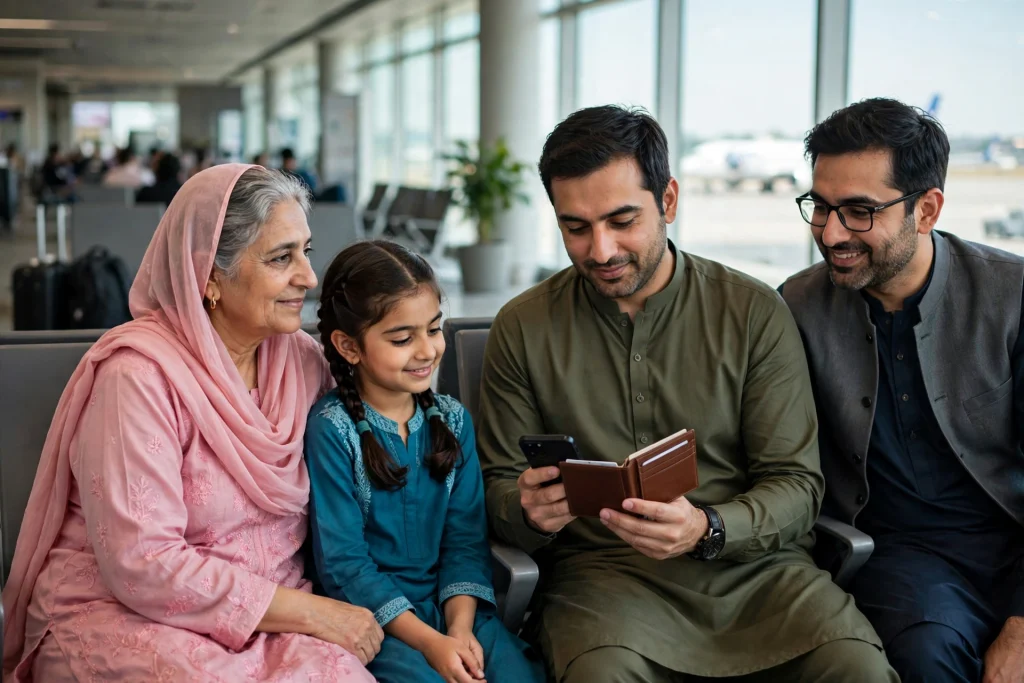
If you live outside Pakistan and you need a NICOP, a CNIC renewal, or any other NADRA document, you have probably seen the adverts. A Facebook page, a WhatsApp number, or a slick-looking website promises to handle your whole application for you. Pay a fee, send your details and documents, and your card will arrive without any hassle. It sounds convenient, especially when you are thousands of miles away from the nearest NADRA office and busy with work and family life abroad.
NADRA has now said, clearly and publicly, that none of these people work for it. On 21 October 2026, the authority warned overseas Pakistanis against sharing their personal information with unauthorised individuals or organisations claiming to represent it. The message could not be simpler: NADRA has no authorised consultants, no agents, and no dealers who process identity documents or submit online applications on its behalf. Anyone who tells you otherwise is not telling the truth.
This matters because an identity document is not an ordinary purchase. Your CNIC or NICOP number, your photograph, your fingerprints, and your family details are the keys to your identity. In the wrong hands, they can be used to open accounts, take loans, or commit fraud in your name, and you may only find out months later. That is why this warning deserves your full attention, even if you have used an “agent” before and nothing went wrong. Getting away with it once does not make it safe.
This article explains exactly what NADRA said, how to recognise a fake agent, the only legitimate routes for getting your documents from abroad, and what to do if you have already handed your details to someone you now doubt. It is written for overseas Pakistanis. If you live in Pakistan, the warning is still useful background, but it is not a new rule for residents inside the country, and this article does not pretend otherwise.
What NADRA Actually Said
The warning was reported by both ProPakistani and ARY News on 21 October 2026, which is a good sign in itself. When two independent news outlets report the same official warning on the same day, you can be confident the warning is real and not a rumour passed around on social media.
The core of the warning has three parts. First, NADRA said overseas Pakistanis should not share their personal information with unauthorised individuals or organisations claiming to represent the authority. Second, it clarified that it has no authorised consultants, agents, or dealers to process identity documents or submit online applications on its behalf. Third, it pointed to the legitimate channels that do exist, which this article covers in detail below.
Notice what the warning does not say. It does not announce a new NADRA service, a new app, or a new fee. It does not change the rules for people living in Pakistan. It is an advisory, a warning to protect people who are already abroad and may be tempted by shortcuts. That distinction matters, because fake agents often dress up old warnings as new launches, or claim that “new NADRA rules” mean you must now go through them. There is no such rule. The only thing that is new here is the warning itself.
The One Fact That Exposes Every Fake Agent
Here is the simplest test you will ever need. If someone claims to be a NADRA agent, a NADRA consultant, or a NADRA dealer, that claim alone tells you they are not legitimate. NADRA has said it has none of these. There is no authorised middleman, no approved representative, and no official partner who submits applications for you in exchange for a fee.
This is different from many other services abroad. For visas, for example, there are authorised application centres. For NADRA documents, there is no equivalent. The system is designed so that you deal with NADRA directly, either through its own app, its own official websites, or in person at its own centres and embassy counters. Anyone standing between you and NADRA, charging you for access, is standing there without NADRA’s permission.
That also means you should be suspicious of impressive-sounding titles. “Registered NADRA consultant”, “approved NADRA agent”, “NADRA authorised dealer” — none of these titles exist. A smart-looking office, a professional website, or a large number of followers on social media does not change that. If NADRA has not authorised agents, then no amount of smart presentation can make an agent authorised.
How to Spot a Fake Agent or Fake Website
Fake agents rarely announce themselves as frauds. They usually look helpful, and they often target people at exactly the moment they feel stuck: when an application has been delayed, when a document has expired, or when a family member urgently needs a card. Here are the warning signs to watch for.
First, watch the website address. NADRA’s official online services run through the Pak ID app and through official websites ending in gov.pk. A website with a similar name but a different ending, or a long, complicated address that only resembles NADRA’s name, is not NADRA. Scammers often register names that look almost right at a glance, hoping you will not check the address bar carefully. Always check it, letter by letter, before you type in any personal detail.
Second, watch how they ask you to pay. A legitimate government process has a clear, official payment route inside its own system. If someone asks you to send money to a personal bank account, a personal mobile wallet, or through a money transfer to an individual’s name, that is a serious red flag. This article deliberately gives no fee figures for agents, because no agent fee is legitimate in the first place, and quoting a “normal” agent fee would only help scammers look normal. If someone quotes you a fee for their “agent service”, the fee itself is the warning.
Third, watch what they ask for. No legitimate process needs your passwords, your one-time codes, or full control of your phone or email account. If an “agent” asks for your Pak ID login, your email password, or the code sent to your phone, stop immediately. Those details let someone act as you, and once they have them, they can change your application, your contact details, or your delivery address without you knowing.
Fourth, watch the promises. Guaranteed approval, guaranteed delivery dates, and “inside contacts” at NADRA are all claims a real official channel would never make. NADRA itself says it may ask for extra documents or an in-person visit if online verification fails. A process with honest checks and possible delays is a real process. A process that promises everything, instantly, is a sales pitch.
Finally, watch the pressure. Urgent messages like “your card will be blocked tomorrow unless you pay today” or “this offer ends tonight” are designed to stop you thinking. A real government service does not work by countdown timers in WhatsApp messages. If you feel rushed, that is the moment to slow down, close the chat, and check through an official channel instead.
The Only Legitimate Routes From Abroad
If there are no agents, how does an overseas Pakistani actually get a document? There are only a few legitimate routes, and they are all direct. The table below brings them together so you can check any offer against it in seconds.
| Legitimate route | What it is for | How you reach it |
|---|---|---|
| Pak ID mobile app | Online applications, including first NICOP applications, renewals, and tracking | NADRA’s own app, downloaded from your phone’s official app store |
| Official websites ending in gov.pk | NADRA’s online services | A website address that ends in gov.pk, reached directly, not through a link sent by a stranger |
| NADRA Registration Centres | In-person applications and services | NADRA’s own centres |
| Counters at Pakistani embassies abroad | In-person services for overseas Pakistanis | The embassy or consulate in your country of residence |
If the route someone offers you is not on this list, it is not a legitimate NADRA route. That is the whole test. It does not matter how professional the person sounds or how many other people say they used them. The list above is complete, and anything outside it should be treated as unauthorised.
Two practical tips will protect you further. First, always reach the Pak ID app or a gov.pk website by typing the address yourself or using the official app store, never by clicking a link sent to you in a message, an email, or a social media advert. Links are the easiest thing for a scammer to fake. Second, if you are unsure whether a website is real, stop and verify it through a second route, such as calling the embassy or checking NADRA’s official presence, before entering any detail.
First NICOP Applications Through the Pak ID App
For many overseas Pakistanis, the most common task is a first NICOP application, and this is handled through the Pak ID app. The process, as reported, runs in a clear sequence: you enter your personal and family details, upload the supporting documents, complete biometric verification, pay the fee through the app’s own payment route, and then track your application inside the app.
That tracking feature is worth noting. Because you apply yourself, you can see the status of your own application. You do not need to message a middleman to ask what is happening, and nobody else holds your application hostage for another payment. If the app asks for more, that is normal too. NADRA may still request extra documents, or ask you to visit in person if online verification fails. That is not a failure of the system. It is the system doing its job of checking that the person applying is really who they claim to be.
It is also worth being honest about what the app cannot do. It cannot remove the need for accurate documents, it cannot guarantee an outcome, and it cannot speed up a case that needs manual checking. Anyone who promises to make those problems disappear for a fee is selling you something NADRA itself does not offer.
What to Do If You Already Shared Your Details
If you are reading this and realising you have already used an agent, do not panic, but do act. The sooner you act, the less damage can be done.
First, stop all contact and stop all payments. Do not send more money, more documents, or more photographs, even if the person threatens that your application will be cancelled. A threat is a control tactic, not an official notice. A real cancellation would come through an official channel, not through a stranger’s message.
Second, change your passwords. If you shared your Pak ID login, your email password, or any account password, change it immediately, and turn on two-step verification wherever it is offered. If you shared a one-time code, assume the account it protected may have been accessed, and secure that account first.
Third, keep every piece of evidence. Save the chats, the payment receipts, the website address, the phone numbers, and the names used. Do not delete the conversation out of embarrassment. Evidence is what makes a complaint possible, and investigators need the original messages, not your memory of them.
Fourth, report it through official channels. You can approach NADRA through its official channels about misuse of its name, and you can report cyber fraud to the FIA’s cybercrime wing and to NCCIA, the National Cyber Crime Investigation Agency, through their official channels. When you report, give them the evidence you saved: the account names, the numbers, the payment details, and the dates. A report also helps protect the next person, because it adds to the record of how these scams operate.
Fifth, watch your own records. Over the following weeks and months, keep an eye out for unexpected messages about accounts, loans, or applications in your name. If anything arrives that you did not start, treat it as suspicious and check it through the official organisation directly, not through any link or number in the suspicious message itself.
None of this is a guarantee that nothing bad will happen, and this article does not promise that. But these steps are the difference between a bad experience that ends and one that keeps going because the scammer still has access.
What This Warning Is Not
Because warnings like this are often twisted by the very people they warn against, it is worth stating plainly what this warning is not.
It is not a new rule for people living in Pakistan. The warning is aimed at overseas Pakistanis, who are the ones most likely to be approached by fake agents abroad. If you live in Pakistan and apply at a NADRA centre or through the Pak ID app, this warning does not change your process.
It is not a new NADRA service or a new app. No new product was launched alongside this warning. If someone tells you that “NADRA’s new agent system” has started, or that you must now register through their service because of “new rules”, they are using the warning itself as bait.
It is not a fee announcement. This article gives no fee figures for NICOP applications or for any agent service, because no agent fee figures were verified in the reports of this warning, and inventing one would only help scammers set a believable price. For the real fee of your own application, check inside the Pak ID app or through an official gov.pk route at the time you apply.
And it is not a how-to guide for renewing a CNIC or changing a photograph or address. Those step-by-step guides exist separately, and they serve a different purpose. This article is a fraud warning, and its reader action is different: stop, check, and use only the direct routes.
A Short Checklist Before You Apply From Abroad
Before you start any NADRA application from outside Pakistan, run through this checklist. It takes less than a minute, and it closes almost every door a fake agent uses.
- Am I using the Pak ID app from the official app store, or a gov.pk website I reached directly? If not, stop.
- Has anyone asked me for a fee for their “agent service”, a personal-account payment, a password, or a one-time code? If yes, stop.
- Has anyone promised guaranteed approval, a guaranteed date, or an inside contact? If yes, stop.
- Am I being rushed with threats or countdowns? If yes, slow down and verify through an official channel.
- Do I know exactly where my documents and details are going? If not, do not send them.
If every answer is clean, you are on a legitimate route. If even one answer is not, close the chat or the website and start again through the direct route. A few minutes of checking is a small price for protecting an identity you will carry for life.
The warning from NADRA is, at its heart, a simple one. Your identity documents belong to a direct relationship between you and NADRA. There is no authorised person in the middle, no matter how convincing they sound, and no shortcut that is worth the risk of handing your identity to a stranger. Apply directly, check the address bar, and keep your passwords and codes to yourself. That is the whole protection, and it is enough.
The warning to overseas Pakistanis, including NADRA’s clarification that it has no authorised consultants, agents or dealers, was reported by ProPakistani on 21 October 2026, with the same warning independently reported by ARY News the same day.
Also read: Pak ID CNIC Renewal Online: Fees (Rs 400 or Rs 750?), Steps and Timelines Explained and NADRA CNIC Photo & Address Change From Home: PakID App Step-by-Step (October 2026)
FAQs
Does NADRA have authorised agents for overseas Pakistanis?
No. NADRA has clarified that it has no authorised consultants, agents, or dealers to process identity documents or submit online applications on its behalf. Anyone claiming to be a NADRA agent, consultant, or dealer is not legitimate, no matter how professional they look or how many followers they have. The legitimate routes are direct: the Pak ID app, official websites ending in gov.pk, NADRA Registration Centres, and counters at Pakistani embassies abroad.
I live in Pakistan. Does this warning change anything for me?
No. This warning is aimed at overseas Pakistanis, who are the people most likely to be approached by fake agents abroad. It is not a domestic rule change and it does not change the process for residents inside Pakistan. If you live in Pakistan, you continue to apply through the same direct routes: the Pak ID app, gov.pk websites, or a NADRA centre in person.
Can a family member or friend apply on my behalf through the Pak ID app?
NADRA’s warning is about unauthorised individuals and organisations claiming to represent it, and it states clearly that it has no authorised agents or dealers. The safe route is to apply yourself through the Pak ID app or in person at a centre or embassy counter. You should never share your Pak ID login, your passwords, or one-time codes with anyone, including someone offering to apply for you for a fee. If online verification fails, NADRA may ask for extra documents or an in-person visit, which is a normal part of the process.
I already paid a fake agent and shared my documents. What should I do now?
Stop all contact and all further payments first, then change any passwords or logins you shared and turn on two-step verification. Keep all evidence, including chats, payment receipts, website addresses, and phone numbers, and report the matter through official channels, including NADRA’s own channels and the FIA cybercrime wing and NCCIA. Over the following weeks, watch for unexpected messages about accounts or applications in your name, and check anything suspicious directly with the organisation concerned rather than through links or numbers in the suspicious message.