
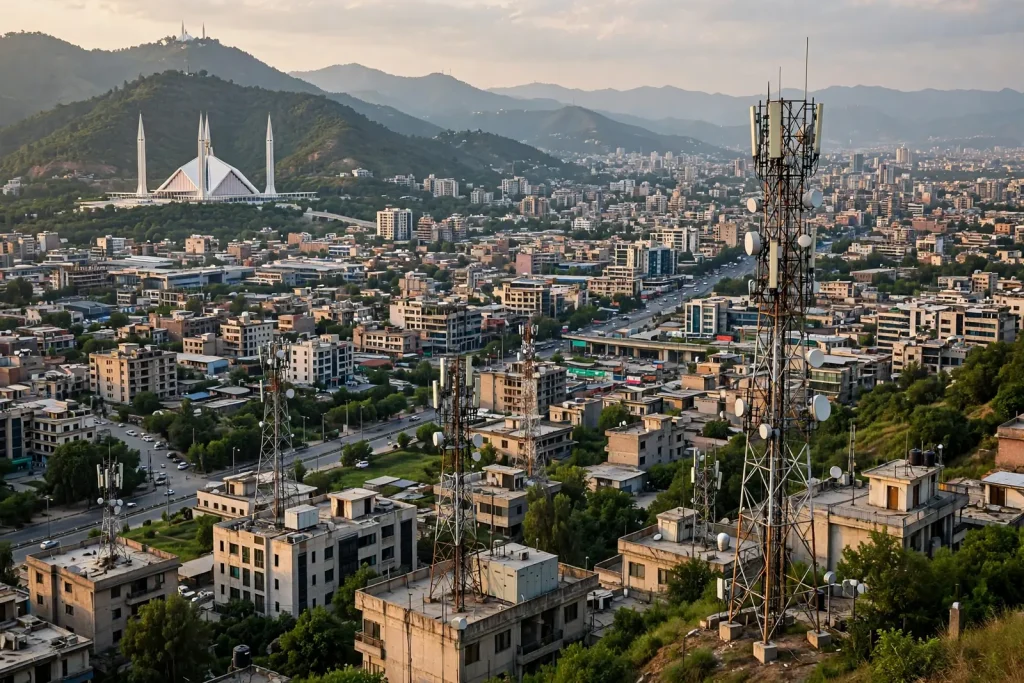
If you live in Islamabad or Rawalpindi and your mobile signal has been letting you down, a date on the calendar has now passed that matters to you. The deadline given by the Pakistan Telecommunication Authority (PTA) to mobile operators to improve network coverage and internet services in the twin cities expired on 31 October 2026. That is the date reported on 31 October, and it marks the end of the time the regulator gave the operators to fix things. It does not, by itself, mean your signal is fixed today. What it does mean is that the next step now belongs to the regulator, and the way you report problems still matters a great deal.
This article explains what the deadline was, what PTA ordered the operators to do, where PTA teams actually went to test the networks, what happens next now that the deadline has passed, and what you should do if your service in Islamabad or Rawalpindi is still poor. It also clears up a few misunderstandings, because a deadline expiring is not the same as a fine being announced, and a drive test is not the same as a clean bill of health.
What PTA ordered the operators to do
PTA directed all four mobile operators in Pakistan — Jazz, Zong, Telenor and Ufone — to improve network coverage in Islamabad and Rawalpindi and to immediately address service-related issues in both cities. The direction was straightforward: find the weak spots, fix them, and stop leaving users in the twin cities with dropped calls and slow internet.
The order covered the whole of both cities, not just one neighbourhood or one road. That matters because twin-cities users often find that coverage is fine in one sector and terrible two sectors away, or strong on a main road and gone the moment you step into a side street, a basement, or a crowded market. PTA’s direction was aimed at that uneven experience: coverage across the cities, and service quality to match, not just a good signal in a few showcase locations.
It is also worth noting what kind of order this was. This was a regulator telling operators to fix identified problems within a set time, with the clear understanding that missing deadlines can carry consequences. PTA has the power to fine operators for poor quality of service, and it has used that power before. But for this specific twin-cities deadline, no penalty or fine amount has been announced. Keep that distinction in mind as you read the rest of this article, because several reports about this story have mentioned penalties in general terms, and it is easy to come away thinking a fine has already been imposed. It has not, at least not in anything published so far about this deadline.
The drive tests: where PTA checked the networks
Before and around the deadline, PTA did not simply wait for the operators to report that they had improved things. PTA Director General Enforcement Brigadier (Retd.) Amir Shahzad conducted mobile network drive tests in various areas of the twin cities to assess the quality of telecom services on the ground. A drive test means going out with testing equipment, measuring real signal strength, call quality and internet speed in real locations, rather than relying on coverage maps drawn in an office.
The areas named in the report where these drive tests took place are listed in the table below. For each area, the tests assessed the same three things: network coverage, voice call quality, and internet service performance. That is the standard set of measurements PTA uses when it checks whether users are actually getting the service they pay for.
| Area where PTA conducted drive tests | What was checked |
|---|---|
| Blue Area, Islamabad | Coverage, voice calls, internet speed |
| Kashmir Highway | Coverage, voice calls, internet speed |
| Margalla Road | Coverage, voice calls, internet speed |
| Iran Avenue | Coverage, voice calls, internet speed |
| Peshawar Road, Rawalpindi | Coverage, voice calls, internet speed |
| 26 Number Chungi | Coverage, voice calls, internet speed |
| Tarnol | Coverage, voice calls, internet speed |
| Islamabad International Airport | Coverage, voice calls, internet speed |
The list is a useful mix. Blue Area is the commercial heart of Islamabad, where offices, banks and shops depend on reliable connectivity all day. Kashmir Highway and Margalla Road are major arteries carrying heavy daily traffic. Peshawar Road, 26 Number Chungi and Tarnol are Rawalpindi-side locations where many commuters and residents live and work. Islamabad International Airport is a gateway location where visitors, many of them arriving in Pakistan for the first time, form their first impression of the country’s mobile networks. If service is poor at an airport, it is noticed immediately, and by people who have no reason to be patient about it.
One important caution applies to this table. The drive tests measured performance in these areas. The results of those measurements were not published in the report. That means no area on this list should be described as “fixed” or “now good” on the basis of this story. A test is a measurement, not a verdict, and until PTA publishes findings, nobody outside PTA and the operators knows which of these locations passed and which still failed.
The same direction applied to all four operators equally. The table below summarises what each operator was directed to do. There was no separate, easier task for one company and a harder one for another.
| Operator | What PTA directed it to do |
|---|---|
| Jazz | Improve coverage and immediately address service issues in Islamabad and Rawalpindi |
| Zong | Improve coverage and immediately address service issues in Islamabad and Rawalpindi |
| Telenor | Improve coverage and immediately address service issues in Islamabad and Rawalpindi |
| Ufone | Improve coverage and immediately address service issues in Islamabad and Rawalpindi |
What happens next: the Chairman’s review
The most concrete next step reported after the deadline is this: following the expiry of the deadline, the PTA Chairman himself will review telecom services in Islamabad and Rawalpindi. That is a significant detail, because it moves the matter from the enforcement team that ran the drive tests to the very top of the regulator.
But it is important to understand exactly what that means and what it does not mean. A review is a next step, not a decision. It does not automatically mean fines, new orders, or a public announcement on a particular date. The Chairman’s review could lead to further directions to operators, to penalties if shortcomings are confirmed, or to a statement about what has improved. Or it could simply be an internal assessment before any of those things happen. None of that has been announced yet, and this article will not guess at the outcome.
What users should watch for in the coming days and weeks is any PTA statement about the review: whether it names operators, whether it publishes drive-test results for the areas listed above, and whether it sets a new deadline or announces action against any operator. Until such a statement appears, the honest position is that the deadline has expired, the review is pending, and the results are not yet public.
What this deadline expiry does NOT mean
Because this story has been reported in several places with slightly different emphasis, a few misunderstandings are already circulating. Let us clear them up plainly.
First, the expiry of the deadline does not mean services in Islamabad and Rawalpindi are now fixed. Nobody has published results saying so. If your calls still drop on Peshawar Road or your internet still crawls in Tarnol, your experience is not contradicted by anything in this story. The deadline was a date by which operators were told to improve things, not a certificate that they did.
Second, no penalty, fine amount, or improvement figure has been announced in connection with this deadline. Reports about PTA’s wider enforcement history mention large fines over past years, and PTA has said in other contexts that operators missing deadlines face financial penalties. But those are general statements about PTA’s powers and past actions, not an announcement about this twin-cities deadline. Do not share social media posts claiming a specific operator has been fined over this deadline unless PTA itself has said so.
Third, this story is not about a shutdown, a suspension of services, or any change to your SIM, package or account. Nothing about the deadline affects your number, your balance, or your bundle. It is a quality-of-service matter between the regulator and the operators, and its effect on you is indirect: better networks if the operators did the work, and a regulator review if they did not.
Fourth, this is a twin-cities story. It is about Islamabad and Rawalpindi specifically. PTA’s wider monitoring work covers the whole country, and that is a separate matter, covered in the next section. Do not assume that a deadline for the twin cities means the same deadline applied to Lahore, Karachi or any other city.
The bigger picture: PTA’s nationwide monitoring drive
The twin-cities deadline did not happen in isolation. It sits inside a wider push by PTA to measure real network performance across Pakistan rather than accept operators’ own reports.
PTA announced on 16 October 2026 that it had intensified nationwide monitoring. All ten of PTA’s zonal offices took part in a week-long drive from 8 to 14 October 2026, measuring coverage, voice call quality and internet service performance in the areas where consumers complain most, and dealing with consumer complaints directly. Operators were directed to fix the problems identified in that drive within a stipulated timeframe, facing financial penalties if they missed their deadlines.
In the week before that, from 30 September to 7 October 2026, PTA field teams inspected 115 telecom sites across the country, including 14 sites in Rawalpindi. During the October drive itself, teams visited places including Thatta, Dera Ghazi Khan, Mandi Bahauddin, Quetta, Faisalabad and Gilgit-Baltistan — areas where users have complained about dropped calls and slow internet for years.
The twin-cities direction fits the same pattern: measure on the ground, direct fixes, set a deadline, and follow up. The difference is that the twin-cities deadline has now expired, and the follow-up step — the Chairman’s review — is the part users should watch. The nationwide drive also shows why your individual complaint matters: PTA’s teams go where consumers complain most, so a pattern of complaints from one area is exactly what puts that area on the testing list.
What users in Islamabad and Rawalpindi should do now
If your service is still poor, the deadline expiring does not leave you without options. In fact, this is the best time to make your problem part of the record, because PTA is actively reviewing services in your two cities. Here is a practical sequence.
First, check the basics on your own phone so you can describe the problem accurately. Note the exact location where the problem happens, the time of day, and what goes wrong: no signal at all, calls dropping, calls not connecting, or internet too slow to load pages. Check whether the problem happens on one network or on every network you can test, and whether it happens indoors, outdoors, or both. A complaint that says “no signal in my street in Tarnol every evening after 7 pm” is far more useful than “network is bad”.
Second, report the problem to your operator first, through its helpline or app, and keep the complaint reference number. Operators are required to deal with complaints, and a reference number proves you raised the issue. If the problem is a coverage gap rather than a fault on your line, say so clearly, and mention that PTA has directed operators to fix coverage in the twin cities.
Third, if your operator does not resolve the problem, escalate to PTA on its toll-free helpline 0800-55055. When you call, give the location, the operator’s name, your complaint reference number, and a short description of the problem. This is the established route for service-quality complaints, and it is the same route PTA’s own teams use to decide where to test next.
Fourth, keep a simple record. Note the dates you complained, the reference numbers, and whether anything changed afterwards. If PTA publishes drive-test results or announces action, your own record lets you compare what was claimed with what you actually experience. If nothing changes, your record is the evidence for a follow-up complaint.
Finally, do not pay anyone who promises to “fix” your signal for a fee, and do not fall for messages claiming your SIM will be blocked because of this deadline. The deadline is about operators improving their networks, not about users’ accounts. Any message demanding payment or personal details in connection with this story should be treated as a scam.
The deadline expiring is good news in one sense: it means the period of waiting for operators to act is over, and the regulator’s own review is next. But it is not, on its own, proof that anything has improved. The honest test is the one you run every day on your own phone. If the signal is better, the work was done. If it is not, the complaint route above is how your experience becomes part of the official record, and that record is what the Chairman’s review should be judged against.
The deadline for improving mobile services in Islamabad and Rawalpindi has expired, and the next move belongs to PTA. This article is based on the report published by CapitalNewsPoint on 31 October 2026, which reported the expiry of the deadline, the drive tests conducted by PTA Director General Enforcement Brigadier (Retd.) Amir Shahzad, and the Chairman’s upcoming review of telecom services in the twin cities.
FAQs
Did PTA fine any operator when the twin-cities deadline expired?
No fine or penalty connected to this deadline has been announced. PTA has said in other contexts that operators missing deadlines face financial penalties, and it has fined operators for poor service in the past, but no specific fine amount or penalised operator has been named in connection with the 31 October 2026 twin-cities deadline. The reported next step is a review by the PTA Chairman, not a fine.
Which areas did PTA test in Islamabad and Rawalpindi?
PTA Director General Enforcement Brigadier (Retd.) Amir Shahzad conducted drive tests in Blue Area, Kashmir Highway, Margalla Road, Iran Avenue, Peshawar Road, 26 Number Chungi, Tarnol, and Islamabad International Airport. The tests measured coverage, voice call quality and internet service performance, but the results were not published in the report, so no area should be described as fixed on the basis of these tests alone.
Does the deadline expiring affect my SIM, package or balance?
No. The deadline was about operators improving network coverage and service quality in the twin cities. It does not change your number, balance, bundle or account status. If you receive a message claiming your SIM will be blocked because of this deadline, or demanding payment to fix your signal, treat it as a scam and do not share personal details.
What should I do if my mobile service in Islamabad or Rawalpindi is still poor?
First report the problem to your operator and keep the complaint reference number, noting the exact location, time and nature of the problem. If the operator does not resolve it, escalate to PTA on its toll-free helpline 0800-55055 with your location, the operator’s name and your complaint reference number. Keep a record of your complaints so you can compare your experience with any results or action PTA announces after the Chairman’s review.