
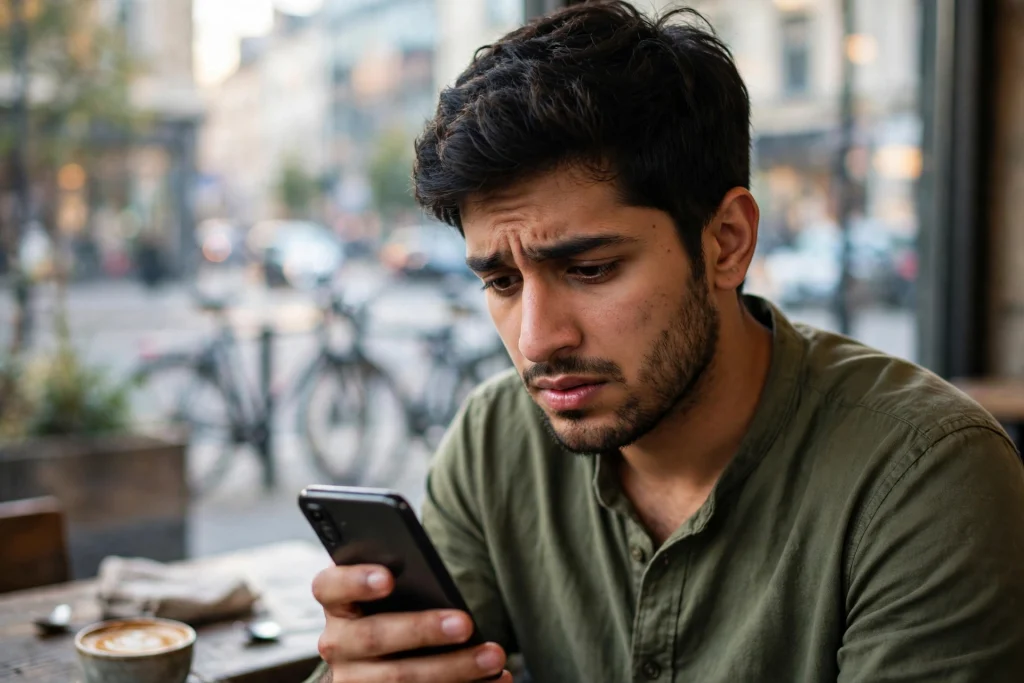
If you woke up to a message saying TikTok has been banned in Pakistan, take a breath before you forward it. The message is not real. The Pakistan Telecommunication Authority (PTA) has confirmed that it has not banned TikTok, and that no notification about a TikTok ban has been issued at all. The document going around on WhatsApp, Facebook and X is fake, and PTA said so clearly on 5 November 2026.
This is the kind of rumour that spreads fast in Pakistan because TikTok is part of daily life for millions of people. It is where small businesses sell their products, where students watch short lessons, where creators earn a living, and where families share funny videos every evening. News of a ban hits hard, and that is exactly why a fake notification like this one travels so quickly. Someone sees a screenshot, panics, and forwards it to ten groups before checking whether it is true.
The good news is that you can check a claim like this in less than a minute, and this article shows you exactly how. We explain what PTA actually said, what the fake notification claimed, the five warning signs that give a fake away, what to do if you already shared it, and the two places you should always check first before believing any ban claim.
What PTA actually said on 5 November 2026
On 5 November 2026, PTA posted a clarification on X through its official account, @PTAofficialpk. The message was short and direct. PTA said it had noticed a fake notification circulating on social media about an alleged ban on TikTok in Pakistan. It clarified that no such notification had been issued, and that the circulating information was false and misleading.
PTA also gave the public clear advice. It said people should not share or rely on unverified information circulating on social media. Instead, citizens should get authentic information only through PTA's official website and its verified social media accounts. That is the whole point of the clarification: if a ban were real, PTA would announce it through its own channels first, not through a screenshot in a WhatsApp group.
The clarification was reported the same day by several Pakistani news outlets, including The Express Tribune, ProPakistani, Hum English, The Current, NetMag, UrduPoint, CW Pakistan and NewsGuru. The reports all carried the same message: no TikTok ban decision, no notification issued, and the circulating document is fake. When that many independent newsrooms report the same official statement on the same day, the picture is clear.
One honest note is worth adding here. At the time of writing, the PTA post on X could not be loaded directly, because access to x.com was blocked in this writing environment. The wording of the post quoted in this article therefore comes from press reports of PTA's statement, which all quote the same lines. That is also a useful lesson in itself: a genuine official statement gets picked up by the press within hours, while a fake one only ever travels as a screenshot.
What the fake notification claimed
The fake document was designed to look official, and that is why so many people believed it. It carried PTA's name and logo, and it was dated 4 November 2026, one day before PTA issued its clarification. According to press reports describing it, the document claimed that PTA had decided to suspend TikTok across Pakistan after reviewing the platform's content.
The fake notification gave three reasons for the supposed decision: national security, public order and the protection of children. It also claimed that internet service providers had been directed to block TikTok nationwide with immediate effect. That phrase, "with immediate effect", is part of what made the message feel urgent. It made people think they had to download their videos or say goodbye to the app right now.
None of it was true. PTA has not decided to ban TikTok, it has not issued any notification about a ban, and it has not directed internet providers to block the app. The document was made to look like an official order, but it never came from PTA.
It is important to be precise about what this means. PTA saying there is no ban decision right now is not the same as saying TikTok can never be banned in the future. The regulator only confirmed the current position: no decision has been taken and no notification exists. Anyone who tells you TikTok is safe forever is going further than PTA itself went, and that would be just as wrong as believing the fake notification.
Why this rumour spread so fast in Pakistan
Fake ban news spreads quickly in Pakistan for a simple reason: it has happened before, so people find it believable. PTA has suspended TikTok in the past, and many users still remember those days clearly. The last time the platform was restored was 19 November 2021, after a suspension that lasted nearly five months. When someone who lived through that sees a new "ban" message, their first reaction is not suspicion, it is worry.
The second reason is the way the message travels. A ban notice does not arrive as a link to pta.gov.pk. It arrives as a screenshot in a family WhatsApp group, forwarded from another group, with a caption like "TikTok band ho gaya" or "Forward to everyone". Screenshots are easy to fake and hard to check, because you cannot click on a screenshot to see where it came from. By the time the message reaches you, it may already have passed through five or six groups, and each forward makes it look more believable.
The third reason is timing. The fake notification was dated 4 November 2026, and it started circulating just before PTA's clarification on 5 November. For about a day, there was no official denial to compare it against, and that window was enough for the message to reach millions of phones. This is how most fake notifications work: they get a head start, and the truth has to catch up.
There is one more detail that added to the confusion, and it needs to be understood correctly. TikTok removed more than 23.2 million videos in Pakistan between April and June 2026 for violating its community guidelines, and nearly 95 percent of those videos were taken down within 24 hours, according to The Express Tribune. That is a large number, but it is not a ban, and it is not a reason for a ban. It is routine enforcement data from TikTok's own quarterly report: videos that break the platform's rules get removed, and most of them are removed quickly. Content removal and a government ban are two completely different things, and mixing them up is exactly how a fake notification starts to sound believable.
How to spot a fake PTA notification in 60 seconds
You do not need any special skill to check a ban claim. You only need to slow down for one minute and run through the five checks below. If a message fails even two of them, do not forward it.
First, check the source. A real PTA announcement appears on pta.gov.pk or on PTA's verified social media accounts. A screenshot with no link to either of those is not a source, it is just a picture. Open your browser, go to pta.gov.pk, and look for the notice yourself. If it is not there, that is a strong sign the notice does not exist.
Second, look for a notification number. Real government notifications carry a reference number, a date, and the name and designation of the officer who signed them. The fake TikTok notification had a date, 4 November 2026, but no verifiable notification number that could be matched against PTA's own records. A document that claims to be an official order but cannot be traced to any official register is not an official order.
Third, check how the message reached you. If it arrived as a screenshot, or as a forwarded message marked "forwarded many times", be extra careful. Real announcements are shared as links to official pages, not as images passed from group to group. Screenshots are the favourite format for fakes because nobody can click through to check the original.
Fourth, look for the "immediate effect" trick. Fake notifications almost always claim something will happen "with immediate effect" or "from today". Real regulatory decisions are usually announced with a date, a process, and a statement explaining what happens next. Urgency is a tool to stop you thinking, and it works best when the message is fake.
Fifth, search the news. If PTA had really banned TikTok, every major Pakistani news channel and newspaper would report it within the hour. Open Google and search for the claim. If the only results are social media posts and no news outlet has reported it, the claim is almost certainly false. In this case, the opposite happened: the news reported PTA's denial, not a ban.
| What to check | A real PTA announcement | The fake TikTok ban message |
|---|---|---|
| Where it appears | Published on pta.gov.pk and PTA's verified accounts | Circulated only as a screenshot on WhatsApp and social media |
| Notification number | Carries a reference number that can be traced | No verifiable notification number |
| Source link | Shared as a link to an official page | Shared as an image with no clickable source |
| How it spreads | Announced by PTA, then reported by the press | Forwarded many times through private groups |
| Tone | Gives a date, a process and next steps | Claims "immediate effect" to create panic |
| News coverage | Reported by major news outlets the same day | No news outlet reported a ban, only PTA's denial |
Keep this table in mind the next time any "ban" message reaches your phone. The same five checks work for fake notices about WhatsApp, YouTube, Facebook or any other app. The name of the app changes, but the tricks stay the same.
What to do if you already shared the fake notification
If you forwarded the fake TikTok ban message before you knew it was false, do not feel embarrassed. Millions of people shared it, and most of them did so because they wanted to warn their friends and family. The important thing is what you do next, and it only takes two minutes.
First, delete the message wherever you shared it. In WhatsApp, long-press the message, tap delete, and choose "Delete for everyone" if the option is still available. Do the same in any Facebook group or page where you posted it. Deleting the message stops it from spreading further from your account.
Second, post a correction in the same place. A short message is enough: "The TikTok ban notification I shared earlier is fake. PTA confirmed on 5 November 2026 that no ban has been decided and no notification was issued. Please do not forward the old message." A correction does more good than a silent deletion, because the people who saw your first message may never see the official denial otherwise.
Third, tell the person who sent it to you. Reply to the original sender with the same correction. They probably forwarded it to other people too, and your message may be the first time they hear that it was fake. One correction can stop a chain that would otherwise keep going for days.
Finally, do not share "corrections" that add new claims of their own. Some people try to help by writing long explanations about why TikTok will or will not be banned, and those explanations often contain fresh guesses that are just as wrong as the original fake. Stick to the facts PTA gave: no decision, no notification, check pta.gov.pk and @PTAofficialpk.
Where to check first before you believe any ban claim
The fastest way to protect yourself from the next fake notification is to know your two first stops in advance, so you do not have to think about it when a scary message arrives.
Your first stop is pta.gov.pk, PTA's official website. This is where real notices, press releases and public advisories are published. If a ban were real, it would appear here. If you cannot find it here, treat the claim as unproven until you can.
Your second stop is PTA's verified social media accounts, including @PTAofficialpk on X. PTA used exactly this account to issue the 5 November 2026 clarification, and it is the account the press quoted. Make sure the account you are reading has the verification mark and the correct handle. Fake accounts with similar names are common, and they are part of the same problem.
If neither source mentions a ban, wait before you believe or share anything. A real ban cannot stay hidden from PTA's own website, and a fake one cannot survive a one-minute check of it. The habit of checking first is the whole answer to this problem, and it costs you less time than forwarding the message did.
It also helps to follow one or two trusted Pakistani news outlets and check their websites when a big claim starts circulating. In this case, The Express Tribune, ProPakistani, Hum English, The Current, NetMag, UrduPoint, CW Pakistan and NewsGuru all reported PTA's clarification on 5 November 2026. When several independent newsrooms agree on the same official statement, you can trust it. When no newsroom has reported the claim at all, you should not.
The bottom line for TikTok users in Pakistan
TikTok is not banned in Pakistan. PTA has said so in plain words, on 5 November 2026, and the notification claiming otherwise is fake. If you use TikTok to run a business, to teach, to learn or simply to relax after a long day, you do not need to change anything because of this message.
The real lesson of this episode is not about TikTok. It is about how quickly a single fake screenshot can travel across Pakistan, and how little effort it takes to stop it. A one-minute check on pta.gov.pk or @PTAofficialpk would have been enough to catch this fake before it reached your phone. The next fake notification will use the same tricks: an official-looking logo, a recent date, urgent wording, and a screenshot instead of a link. Now you know what to look for, and you know where to check first.
Share this article with the family group where the fake message first appeared. The next time a ban rumour arrives, someone in that group will know how to check it, and that is how a rumour stops spreading.
Also Read: Two More PTA Stories Every Pakistani User Should Know
If this story made you think about how PTA communicates with the public, two other GemTakes articles are worth reading. The first is "WhatsApp Calls Keep Dropping in Pakistan — PTA Issues 5 Show-Cause Notices, and What You Can Do", which explains what happened when PTA took formal action over poor call quality and what users can do when their WhatsApp calls keep failing. The second is "PTA Five SIM Per CNIC Limit: What Happens When You Already Have Five SIMs", which walks through the five-SIM limit in plain language and explains what to do if you already have five SIMs registered on your CNIC. Both stories show the same lesson as this one: when PTA takes a real decision, it announces it through official channels, and knowing where to look saves you from confusion.
To sum up the key facts: PTA clarified on 5 November 2026 that no TikTok ban decision has been taken and that the notification circulating on social media, dated 4 November 2026, is fake and misleading. The authority advised the public not to share or rely on unverified information and to get authentic updates only from its official website and verified social media accounts. As reported by The Express Tribune, the fake document claimed PTA had decided to suspend TikTok across Pakistan with immediate effect, but no such notification was ever issued. Before you believe or forward any future ban claim, check pta.gov.pk and @PTAofficialpk yourself first, because the details of any real decision can change and only the official channels will have the latest position.
FAQs
Is TikTok banned in Pakistan?
No. PTA clarified on 5 November 2026 that no TikTok ban decision has been taken and no notification about a ban has been issued. The notification circulating on social media claiming a ban is fake, and TikTok continues to work normally in Pakistan.
What did the fake TikTok ban notification say?
The fake document was dated 4 November 2026 and claimed PTA had decided to suspend TikTok across Pakistan after reviewing the platform's content, citing national security, public order and the protection of children. It also claimed internet providers had been directed to block TikTok nationwide with immediate effect. PTA has confirmed that none of this is true and that no such notification was issued.
How can I check whether a PTA notification about TikTok is real?
Check pta.gov.pk first, then PTA's verified social media accounts such as @PTAofficialpk on X. A real announcement will appear on those official channels. Also look for a notification number, and search trusted Pakistani news outlets. If the claim only exists as a screenshot forwarded through WhatsApp groups, treat it as unverified and do not forward it.
I shared the fake TikTok ban notification. What should I do now?
Delete the message wherever you shared it, using "Delete for everyone" in WhatsApp where possible, and then post a short correction in the same group or page saying PTA confirmed on 5 November 2026 that the notification is fake and no ban has been decided. Also tell the person who sent it to you, so they can correct the people they forwarded it to.